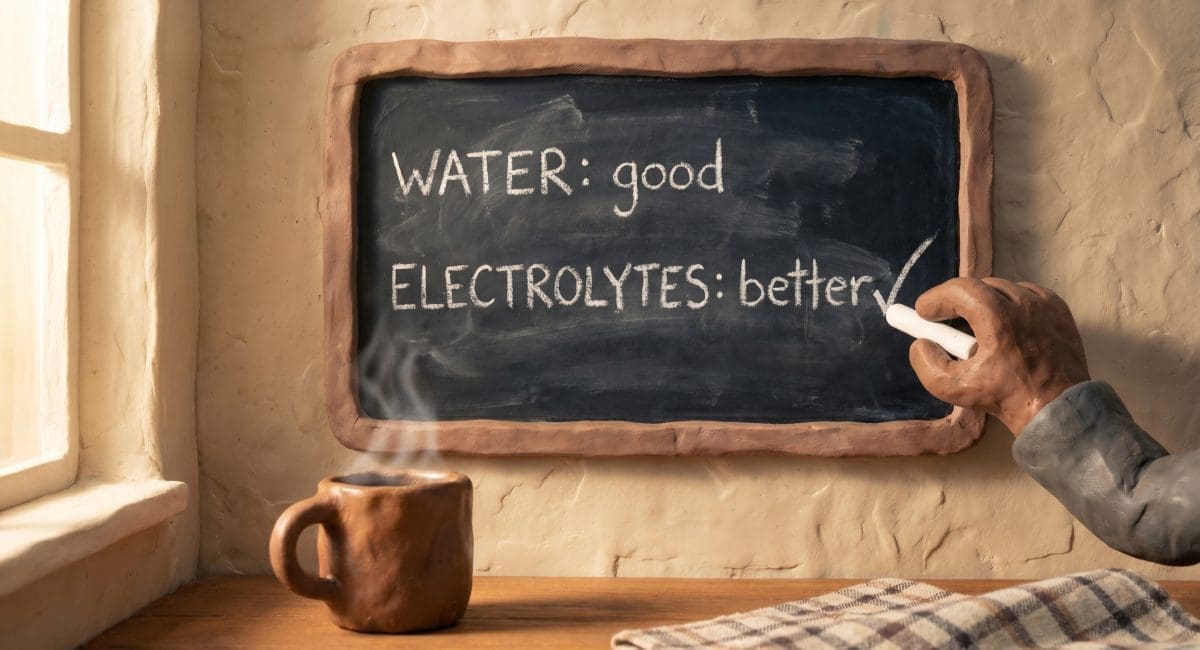
Does drinking water prevent a hangover? Here’s the honest answer: not really. Drinking water between drinks does not stop the core biological processes behind a hangover. Water doesn’t stop the biological processes that cause a hangover. But — and this is important — it’s still one of the smartest things you can do on a night out. The problem isn’t the advice. It’s the reason most people think it works.
You’ve heard the one-for-one rule a hundred times. One drink, one glass of water, repeat. The assumption is that since alcohol dehydrates you and hangovers feel like dehydration, water must be the antidote. That logic is understandable. It’s also mostly wrong.
Here’s what the science actually says — and why drinking water still belongs in your hangover prevention game plan, alongside other hangover myths worth busting, just for different reasons than you think.
Why Everyone Thinks Water Prevents Hangovers
The reasoning behind the water myth is genuinely logical. Alcohol is a diuretic. It suppresses vasopressin — the hormone that tells your kidneys to hold onto water — so your body flushes more fluid than it takes in. The result is dehydration.
Dehydration causes thirst, dry mouth, fatigue, and headaches. A hangover causes thirst, dry mouth, fatigue, and headaches. They look identical from the outside, so for years everyone assumed they shared the same root cause.
If alcohol dehydrates you, and dehydration causes hangovers, then water should fix hangovers. The logic is clean. The conclusion is wrong.
What the Science Actually Says
A 2024 review led by pharmacologist Marlou Mackus at Utrecht University analyzed data from multiple studies on alcohol, hydration, and hangover severity. The finding was blunt: dehydration and hangovers are “two co-occurring but independent consequences of alcohol consumption.”
In plain terms — yes, drinking alcohol dehydrates you, and yes, you’ll be hungover the next morning. But one doesn’t cause the other. They just happen at the same time.
💧 The key finding: Drinking water during or after alcohol consumption may relieve specific dehydration symptoms like thirst and dry mouth — but it has only a modest effect on preventing a next-day hangover. Rehydrating won’t touch the nausea, headache, or fatigue that define a real hangover.
This doesn’t mean you should skip the water. It means you need to understand why water helps — because the real reasons are worth knowing.
What Actually Causes a Hangover
If dehydration isn’t the culprit, what is? A hangover is the result of several overlapping biological processes that water simply can’t address.
- Acetaldehyde toxicity: Your liver breaks ethanol into acetaldehyde — a highly toxic compound — before converting it into harmless acetate. When acetaldehyde builds up faster than your liver can clear it, you get nausea, sweating, and a racing pulse. No amount of water speeds that process up.
- Immune system inflammation: Alcohol triggers a cytokine response from your immune system. Elevated cytokines cause headaches, chills, fatigue, and the general feeling that your body is staging a revolt. This is the same mechanism behind why hangovers feel worse as you get older — your inflammatory response intensifies over time.
- Gastrointestinal irritation: Alcohol irritates the stomach lining and ramps up gastric acid production. Stomach pain and nausea on a hangover morning are mostly GI-driven, not dehydration-driven.
- Sleep disruption: Alcohol knocks you out but wrecks your REM sleep. You wake up feeling exhausted even after a full night in bed. Water doesn’t fix a disrupted sleep cycle.
- Congeners: Darker liquors like bourbon and red wine contain higher levels of congeners — fermentation byproducts that significantly increase hangover severity. Clear spirits have fewer. This is part of the science behind the hair of the dog cure and why vodka-based drinks are a smarter choice when you’re already hurting.
Water doesn’t neutralize acetaldehyde. It doesn’t calm cytokine activity. It doesn’t repair your sleep architecture or reduce congener load. So when your hangover arrives, water isn’t going to save you.
What Drinking Water Between Drinks Actually Does
Here’s where it gets more useful. Water doesn’t prevent a hangover through chemistry — but it does through behavior. And that turns out to matter quite a bit.
It Forces You to Pace Yourself
Your liver can process roughly one standard drink per hour. Drink faster than that and your blood alcohol concentration (BAC) spikes — which means more alcohol circulating in your system, more acetaldehyde being produced, and a worse morning ahead.
Alternating water with alcohol is a natural pacemaker. It slows your drinking rate, gives your liver more time to keep up, and prevents the steep BAC spikes that make hangovers brutal. This is behavioral, not biochemical — but the effect on next-day misery is real.
It Reduces Total Intake
Water fills your stomach. A full stomach means you feel less compelled to keep drinking. Over the course of a night, using water as a spacer drink often leads to meaningfully less total alcohol consumed. Less alcohol in equals less hangover out. Simple math.
It Prevents Severe Dehydration
Dehydration isn’t the cause of your hangover — but severe dehydration is still worth avoiding on its own. It can cause dizziness, confusion, and in extreme cases, serious medical complications. A 2017 study found that stronger beverages like wine and spirits have a more pronounced diuretic effect than beer, so the dehydration risk scales with what you’re drinking.
Staying hydrated keeps your kidneys and liver functioning properly while they work overtime to clear alcohol and its byproducts. Water helps flush waste products — including acetate — out of your system more efficiently. It’s support work, not a cure.
Why Plain Water Isn’t Always Enough
When alcohol increases urination, you don’t just lose water. You lose electrolytes — sodium, potassium, and magnesium all get flushed out alongside the fluid. This is why you can drink plenty of water the night before and still wake up feeling rough.
Plain water rehydrates you, but it doesn’t restore electrolyte balance. Electrolytes are what allow your cells to actually absorb and use that fluid. Without them, rehydration is slower and less complete.
⚡ The upgrade: Electrolyte drinks, sports drinks, or even a salty snack alongside your water will restore fluid balance more effectively than water alone. Products like Liquid I.V. or Pedialyte are purpose-built for this — they combine the hydration of water with the electrolytes your body actually needs to recover.
The connection between electrolytes and hangover recovery is one of the most underrated pieces of drinking science out there. This is especially worth applying before bed. Drinking a full glass of water with electrolytes before you sleep gives your body a head start on recovery overnight, when it’s doing the heaviest lifting.
The Verdict: What Water Does and Doesn’t Do
| Claim | Verdict | What the Science Says |
|---|---|---|
| Water prevents hangovers | False | Hangovers are caused by acetaldehyde toxicity, inflammation, and sleep disruption — not dehydration. Water doesn’t address any of these. |
| Water cures hangovers | False | Water relieves dehydration symptoms like thirst and dry mouth but doesn’t resolve nausea, headache, or fatigue. |
| Water slows intoxication | True | Alternating water with alcohol slows your drinking pace and gives your liver time to metabolize, preventing rapid BAC spikes. |
| Water reduces total alcohol intake | True | Using water as a spacer drink naturally leads to consuming less alcohol overall during a session. |
| Alcohol causes dehydration | True | Alcohol suppresses vasopressin, causing increased urination and fluid loss. Dehydration is real — it’s just not what causes your hangover. |
| Electrolytes beat plain water | True | Alcohol flushes electrolytes alongside water. Restoring both is more effective than rehydrating with water alone. |
The Bottom Line: Does Drinking Water Prevent a Hangover?
Water doesn’t prevent hangovers. The science is clear on that. Dehydration and hangovers are related but separate problems — and fixing one doesn’t fix the other.
But the one-for-one rule is still worth following — just for different reasons. It paces your drinking, reduces total intake, and keeps your kidneys and liver supported while they do the hard work of processing alcohol.
The real upgrade is electrolytes. Plain water is a start. An electrolyte drink before bed is better. Your morning-after self will notice the difference.
Understanding how electrolytes and hangover recovery connect is just the start. If you want to go further than water, check out the full science-backed hangover prevention guide — it covers everything from timing your drinks to the supplements that actually move the needle. And if you’re already in hangover territory, the how to cure a hangover fast guide has the recovery playbook.
Frequently Asked Questions
Does drinking water between drinks prevent a hangover?
Not directly. A 2024 Utrecht University study found that dehydration and hangovers are independent consequences of drinking — not cause and effect. Water relieves dehydration symptoms but doesn’t address the acetaldehyde toxicity and inflammation that cause most hangover misery. It does help by slowing your drinking pace and reducing total intake, which indirectly reduces hangover severity.
How much water should you drink when drinking alcohol?
The one-for-one rule — one glass of water for every alcoholic drink — is a practical guideline. More importantly, drink a full glass of water with electrolytes before bed. This is when your body starts its overnight recovery process, and giving it hydration support at that point makes a real difference.
Does water sober you up?
No. Water doesn’t speed up how fast your liver processes alcohol. Your BAC drops at a fixed rate of roughly one standard drink per hour regardless of how much water you drink. What water does is slow your drinking pace, which prevents your BAC from climbing as high in the first place.
Are electrolytes better than water for a hangover? What’s the connection between electrolytes and hangover recovery?
Yes, for rehydration purposes. Alcohol flushes electrolytes — sodium, potassium, magnesium — alongside water. Without restoring those, plain water rehydrates more slowly and less completely. Electrolyte drinks or supplements restore fluid balance more effectively than water alone, though neither prevents or cures the hangover itself.
What actually prevents a hangover?
The only guaranteed prevention is drinking less. Beyond that, the most effective strategies are pacing your drinks, eating before and during drinking, choosing lower-congener spirits, staying hydrated with electrolytes, and getting quality sleep. Certain supplements like DHM, B vitamins, and zinc have emerging evidence behind them as well — the best DHM supplements guide covers the top options.
Sources
- Mackus M, et al. Alcohol hangover versus dehydration revisited: The effect of drinking water to prevent or alleviate the alcohol hangover. Alcohol, 2024.
- National Institute on Alcohol Abuse and Alcoholism — Hangovers
- Cedars-Sinai — The Science of Hangovers, 2018
- Polhuis KCMM, et al. The Diuretic Action of Weak and Strong Alcoholic Beverages in Elderly Men. Nutrients, 2017.
- Baj J, et al. Magnesium, Calcium, Potassium, Sodium, Phosphorus, Selenium, Zinc, and Chromium Levels in Alcohol Use Disorder. Journal of Clinical Medicine, 2020.
- Swift R, Davidson D. Alcohol Hangover: Mechanisms and Mediators. Alcohol Health and Research World.
- Mayo Clinic — Hangovers: Symptoms and Causes
Drinking is a normal part of social life for a lot of people — no judgment here. But if you find yourself drinking more than you’d like, or struggling to cut back, that’s worth paying attention to. The SAMHSA National Helpline is free, confidential, and available 24/7 at 1-800-662-4357.