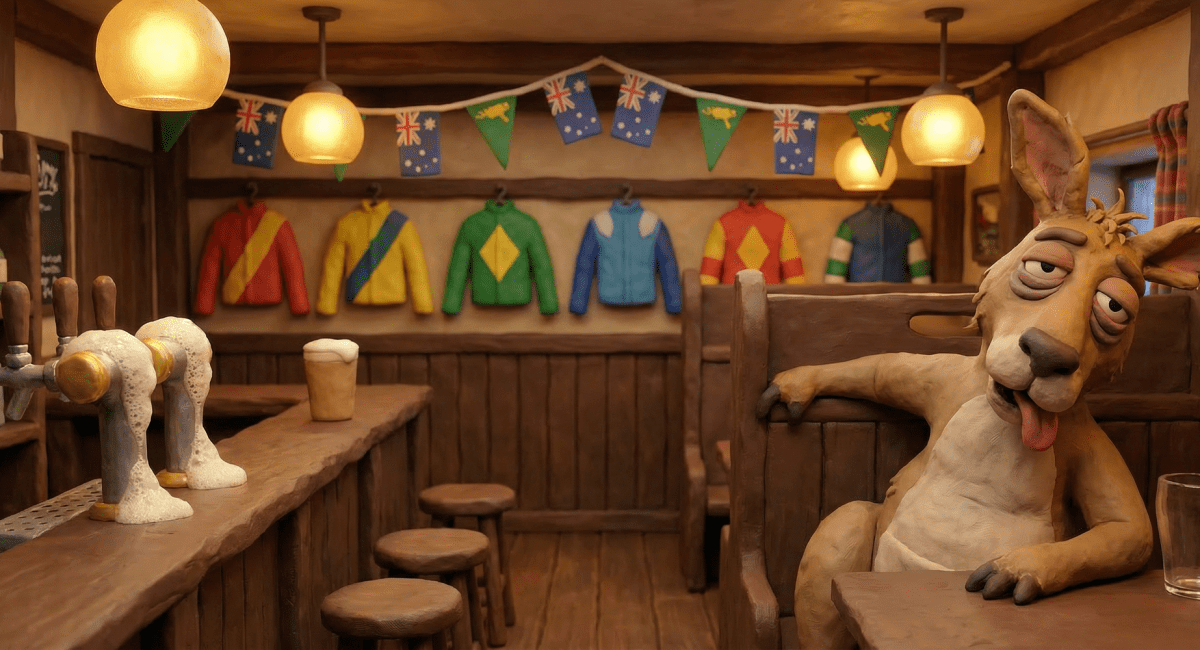
If you think Americans drink on holidays, you’ve clearly never met an Australian.
Australia has quietly built one of the most impressive drinking calendars on the planet — and we mean that as a compliment. Between the summer festive season, a national horse race that turns the first Tuesday in November into a day-long bender, and a sports final that doubles as a public holiday in one state, Australians have found a reason to raise a glass for nearly every month of the year.
What follows is a breakdown of Australia’s biggest drinking days — ranked by volume, backed by data, and paired with the hangover intelligence you’ll actually need the morning after.
How Australia Drinks: The Summer + Sport + Sunshine Trifecta
Australia’s drinking culture is shaped by three things the rest of the world largely doesn’t have all at once: a summer that runs through December and January, a calendar packed with major sporting events, and a deeply ingrained pub culture that treats alcohol as a social necessity rather than an occasional indulgence.
The numbers reflect it. Australian Bureau of Statistics data shows more than one in four adults exceeded safe drinking guidelines in 2022. The Australian Institute of Health and Welfare identifies December as the busiest month of the year for emergency services responding to alcohol intoxication — with November and February not far behind.
In other words: it’s not just the big holidays. It’s the culture around them. Now let’s get into the specifics.
Christmas Eve — The Biggest Retail Drinking Day in Australian History
Christmas Eve holds the top spot for sheer retail volume, and it’s not particularly close. In 2025, Dan Murphy’s — Australia’s dominant liquor retail chain — reported its busiest trading day on record fell on December 24. That’s not a fluke. It’s a pattern driven by last-minute party purchases, family gathering supplies, and the official start of what most Australians treat as a two-week drinking season.
The scale is genuinely staggering. Australians consume an estimated 58 million standard drinks per day across December as a monthly average. During Christmas week specifically, sparkling wine sales quadruple. Endeavour Group — which operates both Dan Murphy’s and BWS — reported roughly four bottles of sparkling wine sold every second across their store network during this period. Sparkling wine’s share of total wine sales doubles from its usual 20% to around 40%.
The night itself is typically a house party or backyard barbecue situation, not a big night out. Which actually makes the hangover worse — you drink more than you planned because you’re comfortable, you skip the water because there’s no bartender cutting you off, and you wake up on Christmas morning absolutely wrecked.
Christmas Eve is a sneaky one. You’re relaxed, the drinks are cold, and no one’s watching the clock. Set a glass-of-water rule before midnight and you’ll actually enjoy Christmas Day. Our hangover prevention guide has the full pre-game strategy.
New Year’s Eve — Seven Times the Ambulances, Zero Regrets (Until Morning)
New Year’s Eve is Australia’s peak intoxication event, full stop. Research from VicHealth and Turning Point documents a seven-fold increase in ambulance attendances and a six-fold increase in emergency department presentations for alcohol intoxication on New Year’s Eve compared to a typical night.
On the venue side, Endeavour Group’s ALH Hotels network reported over 5,000 bottles of champagne popped at midnight across their venues in a single NYE — and that’s just one hospitality group. Champagne and sparkling wine are the drinks of the night, driven by the midnight countdown ritual that’s as universal in Sydney as it is in New York.
The Sydney Harbour fireworks draw enormous crowds, and the celebrations extend well past midnight. Combine that with no work the next day, warm summer weather, and the psychological permission slip of “it’s New Year’s Eve,” and you’ve got a recipe for Australia’s most medically eventful night of the year.
Champagne hangovers are brutal — the carbonation accelerates alcohol absorption significantly. Alternate a glass of still water for every two glasses of sparkling. Check out the best hangover drinks to stock up on before the night starts.
The Friday Before Christmas — Mad Friday Comes for Everyone
Australia shares this one with the UK. The Friday before Christmas — often called “Mad Friday” — marks the end of the working year for a huge portion of the country. Office parties, team lunches that run until 10pm, and the collective exhale of “we made it through another year” all converge on one afternoon.
Endeavour Group reported the busiest bar trade on record for their ALH Hotels network fell on the Friday before Christmas. That stat alone tells you everything. This isn’t a retail volume day like Christmas Eve — it’s a licensed venue day, which means higher spend per person, fewer people pacing themselves, and a lot of Ubers booked in the early hours of Saturday morning.
VicHealth data also confirms this day marks the start of a sustained upturn in alcohol-related harms that runs through the entire summer period. Mad Friday is the first domino in what becomes a very long drinking season.
Work drinks are particularly dangerous because you don’t want to be the first to leave and you can’t easily track your intake. Eat a full meal before the first drink — and a proper one, not just a handful of chips from the buffet table. See our best hangover foods for what to load up on beforehand.
Australia Day — January 26 and Its Complicated Morning After
Australia Day lands on January 26 and combines a public holiday, peak summer heat, and strong beach and barbecue culture into one of the most alcohol-intensive days of the year. It’s also one of the most contested days on the Australian calendar for reasons well beyond hangover recovery — but the drinking data is clear regardless of where you land on the broader debate.
VicHealth research covering a decade of hospital, ambulance, and police data found that after New Year’s Eve, acute intoxication and assaults peak on Australia Day. For Australians under 25, it’s actually the single worst day of the year for alcohol-related assaults and drunkenness. Ambulance attendances for intoxicated young people more than double compared to a typical day.
The outdoor setting is a big factor. Daylight drinking in the heat dehydrates you faster, makes you underestimate your intake, and leaves you with a sun-plus-alcohol hangover that’s genuinely miserable. Australia Day hangovers tend to hit hard.
Drinking in summer heat is a double dehydration hit — your body loses fluid both from alcohol and from sweating. Match every drink with a full glass of water, especially outdoors. Our hangover prevention guide covers exactly how to build a hydration strategy before you start drinking.
AFL Grand Final Day — Victoria’s Unofficial Public Holiday
The AFL Grand Final is held at the MCG in Melbourne on the last Saturday of September, and if you’re in Victoria, you basically treat it as a public holiday whether the calendar says so or not. The rest of Australia watches too — it’s the most-watched annual sporting event in the country — but the intensity is distinctly Victorian.
The in-stadium consumption numbers are remarkable. At the 2022 AFL Grand Final, approximately 100,000 litres of beer were consumed at the MCG alone — nearly 1,500 kegs and thousands of cans — in front of a crowd of 100,024 people. That’s roughly one full litre of beer per attendee, just in the stadium. Add millions more watching at pubs and homes across the country and the national total is one of the highest beer consumption days of the year.
Grand Final day also has a particular arc to it: pre-game drinks at a pub, in-stadium consumption, and then a big night out if your team wins (or a different kind of big night out if they lose). Either way, the outcome doesn’t change the volume much.
Beer hangovers are real, and a long day of stadium drinking compounds them. The carbonation, the volume, and the sun all work against you. Here’s what actually works the morning after a big beer session.
Melbourne Cup Day — The Race That Stops a Nation (And Starts a Bender)
Melbourne Cup Day is held on the first Tuesday of November, and it has a legitimate claim to being Australia’s booziest single event of the year. Not by retail volume — Christmas Eve wins that category comfortably — but by ambulance callouts, assault data, and the sheer intensity of consumption packed into a single afternoon.
VicHealth and Eastern Health research ranked Melbourne Cup as the worst sporting event in Melbourne for alcohol intoxication and assaults — ahead of the AFL Grand Final, the Boxing Day Test, and every other major event on the calendar. Ambulance attendances, emergency department presentations, and hospital admissions all spike on Cup Day and in the days leading up to it. Emergency services reportedly see around 130 patients across the Melbourne Spring Racing Carnival. Some estimates suggest Australians consume a volume equivalent to 25 Olympic swimming pools of alcohol on Cup Day alone — though we’re citing that figure with appropriate skepticism given how difficult it is to verify.
The cultural dynamic is interesting. Melbourne Cup isn’t just a racing event — it’s a fashion event, an office party event, and a champagne-all-afternoon event. The Flemington Racecourse draws enormous trackside crowds, offices across Australia stop work to watch the three-minute race, and what starts as a civilised glass of bubbles at 11am becomes something considerably less civilised by 5pm.
Melbourne Cup is a marathon, not a sprint — which is ironic given the race itself is over in three minutes. The real danger is the six-hour drinking window before the main event. Pacing strategy matters more on Cup Day than almost any other occasion.
ANZAC Day — Dawn Service, Two-Up, and a Very Long Afternoon
ANZAC Day on April 25 is one of Australia’s most sacred public holidays — a day of remembrance for Australian and New Zealand Army Corps soldiers who served and died in wars. It’s also, somewhat paradoxically, one of the biggest drinking days on the Australian calendar.
The day has a distinctive structure that almost guarantees a long drinking session. It starts with dawn services — often attended after very little sleep — followed by mid-morning drinks at RSL clubs, which are legally permitted to open from 5am for ANZAC Day commemorations. The tradition of two-up (a gambling game using two coins, legal on ANZAC Day only) takes place at pubs and clubs through the afternoon, and by the time restrictions lift at 1pm, most venues are already packed.
VicHealth data ranks ANZAC Day third overall for acute intoxication and assaults in Melbourne, behind only New Year’s Eve and Australia Day. The combination of early starts, emotionally charged commemorations, and a full public holiday afternoon creates a uniquely long drinking arc that catches a lot of people off guard.
Starting drinking at 7am — even just a beer or two at the RSL — means you have a very long day ahead. The best hangover drinks to have on hand: electrolytes before you start, water throughout, and something serious ready for the morning after.
Easter Long Weekend — Four Days, No School, No Excuses
Easter doesn’t generate the same volume spikes as Christmas or NYE, but it earns its spot on this list for a different reason: it’s four days long, it falls in early autumn when the weather is still warm, and the historical trading restrictions on alcohol (particularly on Good Friday and Easter Sunday) created a built-up demand effect that shows up in consumption data.
VicHealth identifies the Easter period as a significant spike window for alcohol-related harms. The long weekend structure — Thursday night through Easter Monday — gives people multiple consecutive nights to drink, and the cumulative effect on sleep deprivation and hangover severity compounds quickly. It’s less about one massive night and more about four consecutive days of “just one more.”
For Australians, Easter also often coincides with school holidays, which means family gatherings, camping trips, and beach weekends — all social situations where drinking tends to run longer and later than planned.
Consecutive night drinking is particularly rough because your body never fully recovers between sessions. If you know it’s going to be a long weekend, check out our guide on how to cure a hangover fast — you may need it more than once.
Quick-Reference: Australia’s Biggest Drinking Days
| Occasion | When | Drink of Choice | Hangover Risk |
|---|---|---|---|
| Christmas Eve | December 24 | Sparkling wine, beer | 🔴 Very High |
| New Year’s Eve | December 31 | Champagne, spirits | 🔴 Very High |
| Mad Friday | Friday before Christmas | Beer, wine, cocktails | 🟠 High |
| Australia Day | January 26 | Beer, RTDs, wine | 🔴 Very High |
| AFL Grand Final | Last Saturday, September | Beer (predominantly) | 🟠 High |
| Melbourne Cup Day | First Tuesday, November | Champagne, sparkling wine | 🔴 Very High |
| ANZAC Day | April 25 | Beer, two-up sessions | 🟠 High |
| Easter Long Weekend | March/April (varies) | Beer, wine | 🟡 Medium–High |
Frequently Asked Questions
What is the biggest drinking day in Australia?
By retail sales volume, Christmas Eve is Australia’s biggest drinking day — Dan Murphy’s reported its busiest trading day on record on December 24, 2025. By acute intoxication and emergency presentations, New Year’s Eve takes the top spot, with a seven-fold increase in ambulance callouts compared to a typical night.
Is Melbourne Cup Day really that boozy?
Yes — and the data backs it up. VicHealth research ranked Melbourne Cup as the worst sporting event in Melbourne for alcohol intoxication and assaults, ahead of the AFL Grand Final and every other major event on the calendar. The combination of a public holiday (in Victoria), a six-hour drinking window before the race, and champagne-all-day culture makes it genuinely one of the biggest drinking days in the country.
Why is Australia Day associated with heavy drinking?
Australia Day falls on January 26 — the height of Australian summer — which means outdoor barbecues, beach gatherings, and daylight drinking in the heat. VicHealth research found that after New Year’s Eve, Australia Day has the highest rates of acute intoxication and alcohol-related assaults in Melbourne. For Australians under 25, it’s the single worst day of the year for alcohol-related harm.
Can you drink on ANZAC Day in Australia?
Yes, though trading hours vary by state. RSL clubs can legally open from 5am for dawn service commemorations. The game of two-up — normally illegal — is permitted on ANZAC Day only, which draws crowds to pubs from mid-morning. Full normal trading hours typically resume at 1pm. It ends up being a very long drinking day despite its solemn origins.
How does Australia’s drinking culture compare to the US?
Both countries drink heavily by global standards, but Australia’s drinking calendar has some unique characteristics. Australia’s major sporting events (AFL Grand Final, Melbourne Cup) drive concentrated high-volume consumption in a way that US sporting events do but with additional public holiday weight behind them. Australia’s summer also runs through the Christmas-New Year period, creating a sustained festive drinking season that’s longer and warmer than most of the US experiences.
What’s the best way to recover from an Australian holiday hangover?
The fundamentals don’t change regardless of which hemisphere you’re in. Hydration is step one — alcohol is a diuretic and you lose far more fluid than you realise, especially in Australian summer heat. Electrolytes help speed recovery. Food with protein, healthy fats, and complex carbs helps stabilise blood sugar. Time is the only real cure. See our complete guide to curing a hangover fast for the full breakdown.
Sources
- Endeavour Group “Distilled Insights” Report (2025) — Christmas Eve retail data, sparkling wine consumption statistics
- VicHealth & Turning Point — “Drinking Cultures and Social Occasions: Public Holidays” factsheet
- VicHealth — Australia Day alcohol-related harm research and media release
- VicHealth & Eastern Health — “Drinking Cultures and Sporting Occasions” (Melbourne Cup booziest sporting event ranking)
- Australian Bureau of Statistics — Alcohol Consumption 2022
- Australian Institute of Health and Welfare — Alcohol Overview
- Man of Many — AFL Grand Final Beer Tally (MCG consumption data, 2022)
Drink Responsibly
This article is written with a light touch, but excessive alcohol consumption is genuinely harmful. Australia’s emergency services see thousands of preventable callouts on every major drinking holiday on this list. Know your limits, look out for your mates, and never drink and drive.
If you or someone you know is struggling with alcohol use, free, confidential help is available 24/7 through the SAMHSA National Helpline: 1-800-662-4357. Australian readers can contact DrugHelp at 1800 250 015.