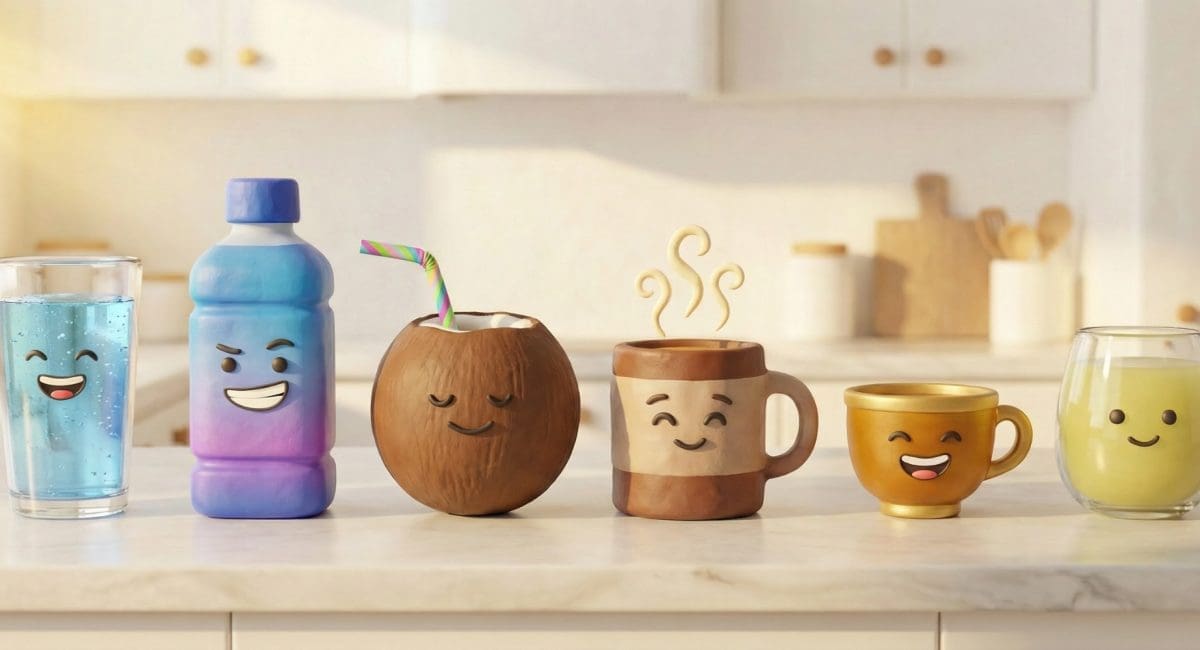
- Water first, then electrolytes. Pedialyte, Liquid I.V., or coconut water beat plain water for serious rehydration.
- Ginger tea is the top pick for nausea — backed by multiple clinical trials.
- Pear juice and soda water are dark-horse winners. Both boost the enzyme that clears acetaldehyde.
- Skip orange juice. Research shows it inhibits a key liver enzyme by 43% and may worsen your hangover.
- Avoid coffee, energy drinks, and hair of the dog. All make recovery slower or worse.
Affiliate disclosure: This article contains affiliate links. If you click through and buy something, we may earn a small commission at no extra cost to you. We only link to products we’d actually use ourselves. Read our full affiliate disclosure for details.
The best hangover drinks aren’t what you think. Most people grab water and a sports drink. A few reach for orange juice. Science says that last one makes things worse. What you drink after a night out is your most important recovery decision — and the research on which drinks actually work is more specific than most people know.
This guide ranks the 10 best hangover drinks with the science behind each one. It also names the popular choices you should skip entirely — including a few that actively make your hangover worse.
The short version: Water first, then electrolytes. Ginger tea for nausea. Pear juice and soda water for the science nerds. Orange juice, energy drinks, and hair of the dog are off the table. Keep reading for the full breakdown.
Why Drinks Matter More Than Food
Drinks are the first line of hangover defense. Food plays a supporting role, but liquid is where real recovery starts. If you want the full picture on preventing hangovers before they start, we cover that separately — but when you’re already in the trenches, hydration is your priority.
Alcohol is a powerful diuretic. It blocks the hormone that tells your kidneys to hold water. Just four standard drinks can cause your body to lose 600 to 1,000 mL of extra fluid over several hours. Add vomiting and sweating, and the fluid loss gets serious fast.
But plain water misses something key. Dehydration from alcohol isn’t just about fluid — it’s also about electrolytes. Alcohol strips sodium, potassium, and magnesium from your body. Your gut absorbs water most efficiently when it comes paired with sodium and glucose. Plain water can’t trigger that mechanism on its own. That’s why electrolyte drinks consistently outperform plain water for serious rehydration.
Certain drinks also affect the enzymes your liver uses to break down alcohol. A landmark study in the International Journal of Molecular Sciences tested 15 common drinks on two key liver enzymes — alcohol dehydrogenase (ADH) and aldehyde dehydrogenase (ALDH). The results are eye-opening. A few popular choices look very bad indeed.
The 10 Best Hangover Drinks, Ranked
#1 Water
Water is the foundation. The Mayo Clinic, Harvard Medical School, and the Cleveland Clinic all start here. Without fluid, nothing else works. If you want to understand what’s actually happening in your body during a hangover, our guide on how to cure a hangover fast covers the full picture.
How you drink it matters. Gulping large amounts overwhelms an already-irritated stomach and can make nausea worse. Small, frequent sips work much better. Room-temperature water is gentler than ice-cold. Keep drinking until your urine turns clear or pale yellow — the most reliable sign you’re rehydrated. Water alone isn’t enough for serious dehydration, but it’s where you start.
#2 Pedialyte and Electrolyte Drinks
Electrolyte drinks beat plain water because they activate a key absorption mechanism in your gut. Sodium and glucose are absorbed together, and water follows by osmosis. That’s the principle behind oral rehydration solutions developed by the World Health Organization for severe dehydration.
Pedialyte is the gold standard. Its electrolyte profile is more concentrated than most sports drinks, with a higher sodium-to-sugar ratio that closely mirrors the WHO formula. Houston Methodist Hospital doctors confirm it’s one of the best choices for replacing lost electrolytes after a big night. Electrolyte powders like Liquid I.V. and LMNT work the same way with less sugar. Look for anything covering the big three: sodium, potassium, and magnesium.
🔗 All three product links go to Amazon, where you can check current pricing, availability, and customer reviews before buying.
One honest note: electrolyte drinks fix dehydration. They can’t reverse the inflammation or toxic buildup driving the rest of your symptoms.
#3 Coconut Water
Coconut water is the best natural alternative to commercial electrolyte drinks. It provides about 10% of your daily potassium per cup, plus sodium and magnesium. A randomized controlled trial in the Journal of the International Society of Sports Nutrition found coconut water equally as effective as a sports drink for rehydration.
One catch: coconut water is lower in sodium than Pedialyte or bone broth. Since sodium drives water absorption in the gut, it may fall short for severe dehydration. Easy fix — add a small pinch of salt to your glass.
#4 Ginger Tea
If nausea is your main problem, nothing beats ginger tea. Multiple clinical trials and systematic reviews confirm ginger works well as an anti-nausea remedy. It blocks the receptors in your gut that trigger vomiting. Its active compounds — gingerols and shogaols — also fight inflammation, which hits another core hangover mechanism.
The evidence is strong enough that Johns Hopkins Medicine notes ginger is endorsed by the American Academy of Obstetrics and Gynecology as an acceptable non-drug nausea remedy. Steep a 3cm piece of fresh ginger in boiling water for 10 minutes. Add honey to taste. Ginger tea bags work too, but fresh is more potent.
#5 Bone Broth and Miso Soup
Bone broth and miso soup are the most underrated hangover drinks going. The Mayo Clinic specifically recommends bouillon soup for hangovers because it replaces lost salt and potassium — and the numbers back that up.
One cup of chicken broth provides about 38% of your daily sodium. Bone broth also adds glycine, an amino acid that supports liver function, plus potassium, calcium, and magnesium. It’s warm, easy on a wrecked stomach, and requires zero cooking skill.
Miso soup goes even further on sodium — one cup provides around 860mg, or about 37% of your daily value. It also contains probiotics from the fermentation process. Alcohol disrupts your gut microbiome, and miso’s probiotics help restore balance and ease stomach discomfort. It’s a legitimate hangover drink that almost no one talks about.
#6 Pear Juice 🍐 (The Surprise Pick)
Research on food compounds and liver enzymes found that pear showed the highest positive effect on ALDH enzyme activity of any fruit or vegetable tested — a 2.64% increase. ALDH is the enzyme that converts acetaldehyde — the toxic compound at the root of your hangover — into harmless acetate. More ALDH means faster clearance of the toxin. We cover the same finding in our guide to the best hangover foods.
A human trial in Preventive Nutrition and Food Science added more evidence. Participants who drank a pear-containing juice before alcohol showed lower peak blood alcohol levels and less thirst and headache than the control group. Use pure pear juice, not pear-flavored drinks. Mix it with coconut water and fresh ginger for a recovery drink that hits acetaldehyde, electrolytes, and nausea all at once.
#7 Green Tea
Green tea delivers two key benefits. The beverage study found it increased a key liver enzyme’s activity by 14.26% and reduced liver damage markers in serum. That’s real liver protection when your liver needs it most.
Green tea is also rich in EGCG, a strong antioxidant that fights the oxidative stress from heavy drinking. Its caffeine is far lower than coffee — around 25 to 50mg per cup versus 95 to 165mg for coffee. You get a mild alertness boost without the diuretic hit or stomach irritation that makes coffee a poor hangover choice.
#8 Soda Water 🫧 (The Counterintuitive Pick)
This is the most counterintuitive pick on the list. Soda water has no electrolytes or special compounds. But the Wang et al. beverage study found it produced the highest ALDH boost of any drink tested — 21.43%. It also showed significant liver protection, reducing multiple liver damage markers in serum.
The reason isn’t fully understood, but the data is solid. Soda water with lemon is a real recovery drink. Mix it with pear juice and you stack the ALDH benefits of both. It also settles stomach discomfort better than still water for some people.
#9 Watermelon Juice
Watermelon juice is over 90% water, making it one of the most hydrating options on this list. It also contains L-citrulline, a compound that may improve blood flow and ease the headache caused by poor circulation. Its natural sugars restore blood glucose, and its potassium adds to electrolyte recovery. It’s gentle on the stomach, naturally sweet, and easy to blend at home. Add a pinch of salt to boost sodium absorption.
#10 Prickly Pear Juice
Prickly pear juice is one of the few natural hangover remedies tested in a proper human clinical trial. A randomized, placebo-controlled crossover trial in the Archives of Internal Medicine found that participants who took prickly pear extract five hours before drinking had a 50% lower risk of severe hangover symptoms versus placebo.
The mechanism is anti-inflammatory. Prickly pear reduced C-reactive protein levels — a marker of body-wide inflammation — and most improved nausea, dry mouth, and loss of appetite. It works best taken before drinking, but prickly pear juice the morning after still provides anti-inflammatory support. Prickly pear supplements are available on Amazon and in health food stores.
🔗 The product link goes to Amazon for current pricing, availability, and customer reviews.
Quick-Reference Table: Best Hangover Drinks
| Drink | Key Benefit | Evidence |
|---|---|---|
| Water | Rehydration foundation | Strong |
| Pedialyte / Electrolyte drinks | Rehydration + electrolyte replacement | Strong |
| Coconut water | Natural electrolytes, potassium | Moderate (RCT) |
| Ginger tea | Nausea relief, anti-inflammatory | Strong (multiple RCTs) |
| Bone broth / Miso soup | High sodium, electrolytes, gut health | Moderate |
| Pear juice | ALDH boost, acetaldehyde clearance | Moderate (human RCT) |
| Green tea | Liver protection, ADH boost, antioxidants | Moderate (lab) |
| Soda water | Highest ALDH boost of any drink tested | Moderate (animal) |
| Watermelon juice | Hydration, L-citrulline, blood sugar | Moderate (nutritional) |
| Prickly pear juice | Anti-inflammatory, nausea, dry mouth | Strong (human RCT) |
Drinks to Avoid When You’re Hungover
Knowing what not to drink is just as important as knowing what to reach for. Several popular choices aren’t just useless — they actively make things worse.
Hair of the Dog
More alcohol is the most dangerous hangover myth on this list. It temporarily delays your blood alcohol returning to zero and masks symptoms. It does not cure your hangover. When you stop again, the hangover returns — often worse than before. Skip it entirely.
Coffee
Caffeine gives a short boost. If you drink coffee daily, skipping it entirely may add a withdrawal headache on top of everything else — one small cup is manageable. But don’t rely on it as a recovery tool. Coffee is acidic and irritates a stomach already inflamed by alcohol. Caffeine narrows blood vessels and raises blood pressure, which amplifies a pounding headache. It’s also a diuretic — drinking it while dehydrated slows your recovery. One cup maximum, always with plenty of water.
Orange Juice ⚠️
This one surprises people. Orange juice seems like the right call — vitamin C, hydration, natural sugars. But the Wang et al. beverage study found fresh orange juice inhibited ALDH enzyme activity by a striking 43.71% and significantly elevated liver damage markers in serum. It also increased acetaldehyde levels in the blood. In plain terms: orange juice may actively worsen your hangover. Eat a whole orange instead — whole fruit is a better option than large quantities of acidic juice on an empty, wrecked stomach.
Energy Drinks
The beverage study found Red Bull significantly increased acetaldehyde levels in the blood and elevated liver damage markers. The high caffeine and stimulants also mask the sedative effects of alcohol, which can lead to drinking more and waking up feeling worse. Avoid them entirely.
Sprite and Coca-Cola
Both showed harmful results in the beverage study. Sprite inhibited both ADH and ALDH activity and raised liver stress markers. Coca-Cola inhibited ALDH activity by nearly 30%. These aren’t neutral choices — they actively interfere with the enzymes your liver needs to clear alcohol and its byproducts.
The Recovery Hydration Timeline
Knowing what to drink is one thing. Knowing when matters just as much. Here’s a simple time-based strategy for what to drink when hungover.
On Waking
Start with 200 to 300mL of room-temperature water, sipped slowly. Begin rehydration without overwhelming your stomach.
First Hour
Switch to an electrolyte drink — Pedialyte, Liquid I.V., or homemade water with salt, honey, and lemon. If solid food sounds impossible, a cup of miso soup or bone broth covers electrolytes in an easy format.
🔗 Pedialyte and Liquid I.V. links go to Amazon for current pricing and availability.
If Nauseous
Brew fresh ginger tea and sip it slowly alongside your electrolytes. This is the most evidence-backed drink for hangover nausea.
Once Stomach Settles
Add pear juice, watermelon juice, or a green recovery smoothie. Green tea or soda water supports liver enzyme activity.
Throughout the Day
Keep drinking until your urine runs clear. Aim for 2 to 3 liters total. Alternate between water, electrolyte drinks, and the teas above.
DIY Recovery Drink Recipes
You don’t need to buy anything special to recover well. These three recipes use ingredients you probably already have and combine multiple recovery mechanisms in one glass.
🧂 Classic Electrolyte Drink
Mix 500mL of water with a quarter teaspoon of sea salt, one tablespoon of honey, and the juice of half a lemon. Mimics the principle of oral rehydration therapy. Works when commercial products aren’t available and costs almost nothing.
🍐 Pear-Ginger Recovery Juice
Blend two ripe pears — or 200mL of pure pear juice — with a 3cm piece of fresh ginger and 200mL of coconut water. Targets acetaldehyde clearance, nausea, and electrolytes in one glass.
🥬 Green Recovery Smoothie
Blend one banana, one cup of watermelon, one cup of coconut water, a handful of spinach, a 3cm piece of fresh ginger, and a pinch of sea salt. Covers dehydration, electrolyte loss, nausea, potassium, folate, and oxidative stress in one go.
What Drinks Can’t Do
Be realistic: No drink speeds up your liver’s ability to clear alcohol. That rate is fixed at roughly one standard drink per hour, full stop. Rehydration drinks address the dehydration piece — and that matters — but they can’t reverse the inflammation or toxic buildup behind your other symptoms. For a full recovery protocol that goes beyond hydration, see our guide on how to cure a hangover fast. The only reliable way to avoid a hangover is to drink in moderation, eat before you go out, and pace yourself.
Products Mentioned in This Article
Affiliate links labeled by network — buying through these supports the site at no cost to you.
| Product | Why It’s Mentioned | Network / Link |
|---|---|---|
| Pedialyte (Unflavored, 4-pack) | Gold standard electrolyte drink. High sodium and a sodium-to-sugar ratio that mirrors the WHO oral rehydration formula. | AmazonView on Amazon |
| Liquid I.V. Hydration Multiplier | Electrolyte powder with three times the electrolytes of standard sports drinks. Convenient single-serve packets. | AmazonView on Amazon |
| LMNT Zero Sugar Electrolytes | High-sodium, zero-sugar powder. 1000mg sodium, 200mg potassium, 60mg magnesium per packet — the highest-sodium electrolyte mix on the list. | AmazonView on Amazon |
| Carlyle Prickly Pear Capsules (180ct) | Prickly pear supplement — the only natural hangover remedy with a human RCT showing meaningful symptom reduction. | AmazonView on Amazon |
Frequently Asked Questions
What is the best drink for a hangover?
Water first, then an electrolyte drink like Pedialyte or Liquid I.V. These two address dehydration and electrolyte loss — the primary drivers of most hangover symptoms. If nausea is your main problem, add ginger tea. For extra recovery support, pear juice and soda water have strong data on boosting the enzyme that clears acetaldehyde.
Is Pedialyte better than Gatorade for a hangover?
Yes, generally. Pedialyte has a higher sodium-to-sugar ratio that more closely mirrors the World Health Organization’s oral rehydration formula. That makes it more efficient at driving water absorption in the intestines. Gatorade works, but Pedialyte is the better choice if you have both available.
Does coffee help a hangover?
Not really. Caffeine gives a short alertness boost, but coffee is acidic and irritates your stomach, narrows blood vessels which can worsen headaches, and is a diuretic that slows rehydration. If you’re a daily coffee drinker, one small cup prevents withdrawal headaches. Don’t use it as your primary recovery drink.
Is orange juice good for a hangover?
No. Despite its vitamin C content, research found fresh orange juice inhibited ALDH enzyme activity by 43.71% and elevated liver damage markers in serum. It may worsen acetaldehyde toxicity during a hangover. Eat a whole orange instead — the fruit is a better option than large quantities of acidic juice on an empty stomach.
What should I drink before bed to prevent a hangover?
A large glass of water and an electrolyte drink before sleep is one of the most effective hangover prevention strategies. Rehydrating before you sleep gives your body a head start on recovery. Adding a dose of DHM supplement before bed can also support acetaldehyde clearance overnight — see our DHM supplement guide for more.
Does hair of the dog work?
No. More alcohol temporarily delays blood alcohol returning to zero, masking symptoms. It doesn’t cure the hangover. When you stop drinking again, the hangover returns — often worse. It also reinforces patterns that can lead to alcohol dependence. Skip it entirely.
Sources
- Wang, F. et al. (2016). “Effects of Beverages on Alcohol Metabolism: Potential Health Benefits and Harmful Impacts.” International Journal of Molecular Sciences.
- Kalman, D.S. et al. (2012). “Comparison of Coconut Water and a Carbohydrate-Electrolyte Sport Drink on Measures of Hydration.” Journal of the International Society of Sports Nutrition.
- Srinivasan, S. et al. (2016). “Influence of Food Commodities on Hangover Based on ADH and ALDH Activities.” Current Research in Food Science.
- Kim, M.J. et al. (2015). “Effect of Mixed Fruit and Vegetable Juice on Alcohol Hangovers in Healthy Adults.” Preventive Nutrition and Food Science.
- Ernst, E. & Pittler, M.H. (2000). “Efficacy of Ginger for Nausea and Vomiting.” British Journal of Anaesthesia.
- Wiese, J. et al. (2004). “Effect of Opuntia ficus indica on Symptoms of the Alcohol Hangover.” Archives of Internal Medicine.
- Mayo Clinic Staff. “Hangovers — Diagnosis and Treatment.” Mayo Clinic.
- Cleveland Clinic. “Hangover: Symptoms, Remedies & Prevention.” Cleveland Clinic.
- LeWine, H.E. “7 Ways to Cure Your Hangover.” Harvard Health Publishing.
- Houston Methodist Hospital. “Hangover Cures: No, They’re Not Real — Here’s What to Try Instead.”
🍺 Hangovers are miserable, but if you’re drinking to the point of needing recovery strategies on a regular basis, that’s worth attention. No judgment — patterns can creep up on anyone. The SAMHSA National Helpline is free, confidential, and available 24/7 at 1-800-662-4357 if you ever want to talk to someone.