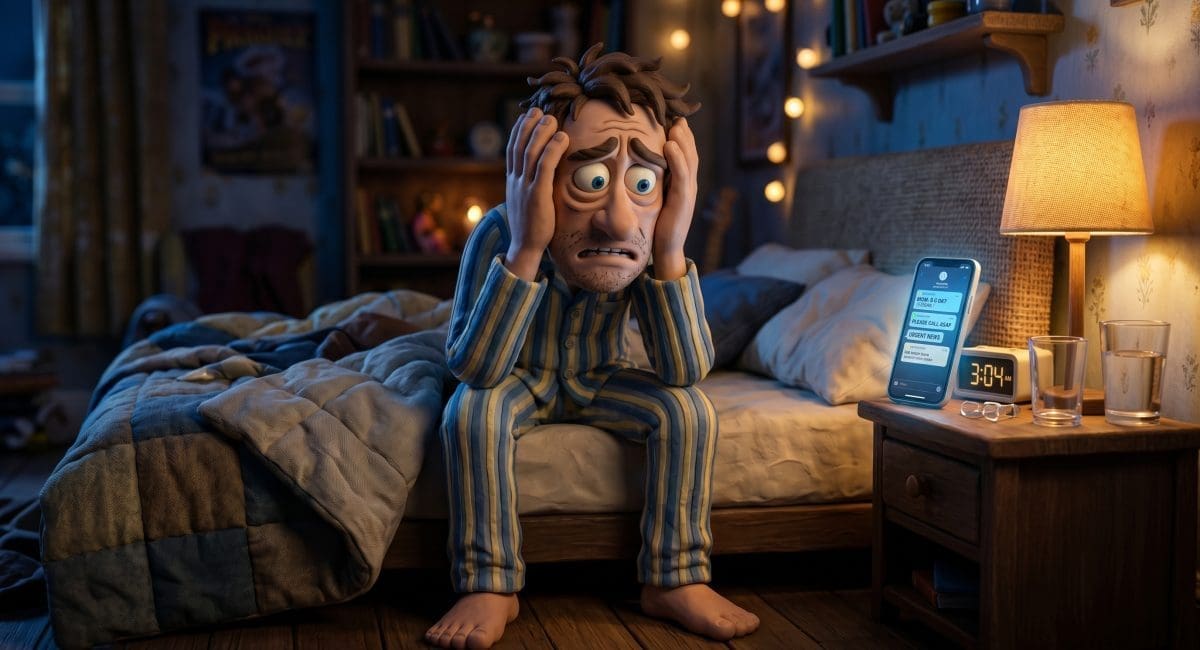
Hangxiety is the wave of anxiety, dread, and shame that hits after drinking — and it’s driven by real brain chemistry, not just regret.
Alcohol boosts your brain’s calming system (GABA) and suppresses the excitatory one (glutamate). When alcohol wears off, both rebound hard — leaving you wired, panicky, and stuck in a doom spiral.
Hangxiety typically peaks 12–24 hours after your last drink and fades within 24–48 hours.
Shy or anxious people get hit hardest, and hangxiety gets worse as you age.
Prevention (hydration, food, pacing, supplements like DHM and magnesium) works far better than trying to fix it the morning after.
This article contains affiliate links. If you buy something through these links, we may earn a small commission at no extra cost to you. Read our full affiliate disclosure.
Hangxiety is that crushing wave of dread, panic, and shame that crashes over you the morning after drinking — and sometimes at 3 AM while the night is still technically happening. Your heart races. Your mind replays every conversation from the night before in excruciating detail. You’re convinced you said something unforgivable to someone, but you can’t remember exactly what.
Congratulations. You’ve entered Hangoverstan’s least favorite neighborhood.
The term hangxiety — a mash-up of “hangover” and “anxiety” — describes the psychological side of a hangover that most people don’t talk about. Headaches and nausea get all the attention. However, for millions of drinkers, the mental anguish is actually worse than the physical symptoms.
And here’s the part that might surprise you: hangxiety isn’t just guilt or regret. It’s a measurable neurochemical event happening inside your brain. Your nervous system is throwing a tantrum because you borrowed tomorrow’s calm to feel relaxed tonight.
Let’s break down exactly what’s happening, who gets hit hardest, and what you can do about it — before and after it strikes.
What hangxiety actually is (and what it isn’t)
Hangxiety is the emotional and psychological distress that follows a drinking session. It shows up as a cocktail of anxiety, shame, dread, and racing thoughts — often paired with physical symptoms that make everything feel worse.
Common hangxiety symptoms include a racing or pounding heart, a sense of impending doom (something terrible is about to happen, you just don’t know what), obsessive replaying of things you said or did while drinking, nausea layered on top of the mental spiral, sweating and restlessness, and an overwhelming urge to apologize to everyone you’ve ever met.
Here’s what hangxiety isn’t: it’s not the same as a clinical anxiety disorder. Hangover anxiety is temporary. It’s triggered by a specific event (drinking), and it resolves on its own — usually within 24 to 48 hours. If your anxiety persists well beyond that window or shows up even when you haven’t been drinking, that’s a different conversation worth having with a doctor.
That said, people with existing anxiety disorders often experience much more intense hangxiety. The two conditions aren’t the same thing, but they definitely amplify each other.
Why your brain turns on you after drinking
Hangxiety isn’t a character flaw. It’s neurochemistry. And once you understand the mechanism, it actually makes perfect sense — in a frustrating, “my brain is working against me” kind of way.
Two neurotransmitters run the show: GABA and glutamate. Think of them as your brain’s brake pedal and gas pedal.
The GABA-glutamate seesaw
GABA (gamma-aminobutyric acid) is your brain’s main calming chemical. It slows neural activity and makes you feel relaxed. Glutamate does the opposite — it’s excitatory. It keeps you alert, focused, and mentally active.
When you drink, alcohol floods your GABA receptors and cranks up the brakes. At the same time, it suppresses glutamate — taking your foot off the gas. The result? You feel loose, relaxed, and carefree. This is the part of the night where you become everyone’s best friend.
But your brain doesn’t just sit there and take it. As you keep drinking, your brain fights back. It reduces its own GABA production and ramps up glutamate sensitivity to compensate for the artificial calm alcohol is creating.
Then the alcohol wears off. And now you’re stuck with reduced GABA (less calm) and supercharged glutamate (more excitability) — with no alcohol buffer to smooth things out. Your brain’s gas pedal is floored while the brakes are barely working.
That’s hangxiety. It’s a neurochemical rebound — your brain overcorrecting after being artificially sedated.
The cortisol pile-on
As if the GABA-glutamate rebound weren’t enough, alcohol also triggers a spike in cortisol — your body’s primary stress hormone. Research shows that alcohol consumption stimulates cortisol production, and those high levels can persist well into the next day.
So while your neurotransmitters are already in chaos, your stress hormone system is pouring gasoline on the hangxiety fire. Meanwhile, dopamine — the neurotransmitter responsible for feeling good — drops below baseline. You feel anxious and joyless at the same time. It’s a neurochemical perfect storm.
The hangxiety timeline: when it hits and when it fades
Hangxiety doesn’t usually hit the moment you stop drinking. It follows a predictable arc that tracks with how your body processes alcohol.
Hours 0–6 (wind-down): Alcohol levels are dropping, but your brain’s compensatory mechanisms haven’t fully kicked in yet. You might feel fine — or just normally hungover. Most people don’t notice hangxiety during this window.
Hours 6–12 (the ramp-up): Alcohol is mostly gone from your system. The GABA-glutamate rebound starts building. Restlessness and mild hangxiety creep in, often masked by physical hangover symptoms like headache and nausea.
Hours 12–24 (peak hangxiety): This is the danger zone. GABA suppression hits its lowest point. Glutamate activity surges. Cortisol peaks. Physical symptoms might actually be improving, but the psychological symptoms are at their worst. This is when the 3 AM doom spiral typically happens if you went to bed late, or the “why did I say that” morning-after crisis.
Hours 24–48 (recovery): Your neurotransmitters gradually return to baseline. The anxiety fades. You start to feel like yourself again — and swear you’re never drinking that much again. (We’ve all been there.)
Worth noting: If your hangover anxiety persists beyond 48 hours or feels significantly out of proportion to how much you drank, it’s worth checking in with a healthcare provider. Persistent anxiety after drinking can sometimes signal a deeper relationship between your alcohol use and mental health.
Who gets hangxiety the worst
Hangxiety doesn’t hit everyone equally. Research has identified several factors that make some people far more vulnerable than others.
Shy and introverted people: A 2019 study from University College London and the University of Exeter found that highly shy drinkers experienced significantly more hangxiety than their extroverted peers — even when consuming the same amount of alcohol. The theory? Shy people rely more heavily on alcohol’s calming effects in social settings, so the hangxiety rebound hits them harder.
People with existing anxiety disorders: If you already deal with generalized anxiety, social anxiety, or panic disorder, hangxiety amplifies your baseline. Alcohol temporarily suppresses your heightened anxiety — and the neurochemical reversal is proportionally more severe when it wears off.
Women: Research indicates that hangxiety is more common in women. Differences in body composition, enzyme activity, and hormonal cycles all contribute to how alcohol affects mood and recovery.
Heavy or binge drinkers: More alcohol means a bigger neurochemical disturbance — and worse hangxiety. The rebound is proportional to the borrowing, and heavy sessions create a much larger debt.
People who are getting older: Here’s one that stings. Hangxiety tends to get worse with age thanks to a phenomenon called kindling. Each episode of the GABA-glutamate rebound actually changes your brain’s structure, making it react more aggressively to future episodes. A binge that caused mild unease at 25 can trigger genuine panic at 35 — even at the same drinking volume. (We cover this in detail in our guide on why hangovers get worse with age.)
How to prevent hangxiety before it starts
The most effective approach to hangxiety is stopping it from happening — or at least reducing its severity. Because once you’re in the middle of a doom spiral at 3 AM, your options get a lot more limited.
These strategies target the specific neurochemical mechanisms that cause hangover anxiety. They’re not magic — but they meaningfully reduce the severity. For a complete pre-drinking protocol, check out our full hangover prevention guide.
Eat before and during drinking
Food slows alcohol absorption, which means a smaller neurochemical disruption and less hangxiety risk. Meals with protein and healthy fats work best. A stomach full of food gives your liver more time to process alcohol gradually instead of all at once.
Pace your drinks and hydrate between them
Alternating alcoholic drinks with water reduces total alcohol load and fights dehydration. Dehydration spikes cortisol and worsens anxiety — making it a double threat for hangxiety. For specific hydration recommendations, see our guide to the best hangover drinks.
Consider targeted supplements
Several supplements show promise for reducing hangover severity — including the anxiety component:
DHM (dihydromyricetin): This is the heavyweight of hangover prevention supplements. DHM helps your body break down acetaldehyde (the toxic byproduct of alcohol metabolism) and has been shown to counteract alcohol’s effects on GABA receptors. Products like Cheers Restore and ZBiotics approach the problem from different angles. Check out our full DHM supplement comparison for the breakdown.
Magnesium: Alcohol depletes magnesium, and low magnesium is independently linked to anxiety. Supplementing before bed after drinking may help support GABA function during recovery. Look for magnesium glycinate or magnesium L-threonate — both cross the blood-brain barrier more effectively than cheaper forms like magnesium oxide.
L-theanine: Found naturally in green tea, L-theanine promotes GABA production and has calming effects without sedation. Research suggests it can help restore the GABA-glutamate balance that alcohol disrupts — directly targeting the hangxiety mechanism.
B-vitamins: Alcohol burns through B-vitamins rapidly. B6 in particular supports neurotransmitter production. A B-complex before bed can help your brain rebuild its chemical toolkit faster, potentially shortening your hangxiety window.
🔗 Several of the supplements mentioned above are available on Amazon — check them out for current pricing, availability, and reviews.
Choose lower-congener drinks
Congeners are chemical byproducts of fermentation that contribute to hangover severity. Clear spirits like vodka and gin contain fewer congeners than dark spirits like bourbon and red wine. While congeners primarily affect physical hangover symptoms, reducing overall hangover severity can also reduce hangxiety intensity. It’s a small edge — but when you’re trying to dodge the doom spiral, every edge counts.
How to calm hangxiety when you’re already in it
Prevention is ideal. But if you’re reading this mid-hangxiety — staring at your ceiling at 3 AM with your heart hammering and your brain insisting you need to send 14 apology texts — here’s what actually helps.
Name what’s happening
Remind yourself: this hangxiety is a neurochemical event. Your brain’s brake pedal isn’t working, and the gas pedal is floored. The dread you feel isn’t an accurate reflection of reality. It’s chemistry. That single reframe doesn’t make hangxiety disappear, but it does reduce the spiral. You’re not losing your mind — your GABA is just depleted.
Breathe with structure
The 4-7-8 breathing technique activates your parasympathetic nervous system — the calming counterpart to the fight-or-flight response that hangxiety triggers. Inhale for 4 seconds, hold for 7, exhale for 8. Repeat this every couple of hours during peak hangxiety.
Hydrate with electrolytes
Dehydration amplifies hangxiety symptoms. Water alone helps, but an electrolyte drink like Liquid I.V. or Pedialyte works faster because it addresses the mineral depletion that alcohol causes. Proper hydration also helps your body clear residual metabolites more efficiently.
Eat something — even if you don’t want to
Low blood sugar makes hangxiety worse. Your brain runs on glucose, and when it’s depleted, anxiety intensifies. Toast, bananas, or eggs are all solid choices. Check out our ranked list of the best hangover foods for the full breakdown.
Move gently
A short walk — even 10 minutes — stimulates endorphins and serotonin production, which directly counteracts the dopamine crash and glutamate surge driving your hangxiety. Don’t run a marathon hungover. Just get outside and walk.
What NOT to do
Don’t “hair of the dog” it. Another drink temporarily suppresses the rebound — but it makes the next round of hangxiety even worse. You’re essentially borrowing more from a brain that’s already overdrawn. Additionally, using alcohol to treat hangxiety symptoms creates a dangerous feedback loop that can accelerate into dependence.
Don’t doom-scroll social media. Your brain is already in a hypervigilant hangxiety state. Feeding it comparison and conflict from your phone is like throwing lighter fluid on an anxiety campfire.
Products mentioned in this article
Affiliate links labeled by network — buying through these supports the site at no cost to you.
| Product | Details | Network / Link |
|---|---|---|
| Cheers Restore | DHM-based hangover prevention supplement. Take before or during drinking to reduce acetaldehyde buildup. | [AFFILIATE LINK: Cheers Restore] |
| ZBiotics | Probiotic-based pre-alcohol drink that breaks down acetaldehyde in the gut. Different mechanism than DHM. | [AFFILIATE LINK: ZBiotics] |
| Magnesium Glycinate | Supports GABA function and crosses the blood-brain barrier. Helps restore neurotransmitter balance after drinking. | Amazon |
| L-Theanine | Amino acid that promotes GABA production and calming effects. Found naturally in green tea. | Amazon |
| B-Complex Vitamins | Alcohol depletes B-vitamins rapidly. B6 in particular supports neurotransmitter production and recovery. | Amazon |
| Liquid I.V. | Electrolyte hydration multiplier. Addresses dehydration faster than water alone — relevant for cortisol reduction. | Amazon |
| Pedialyte | Medical-grade electrolyte solution. Higher electrolyte concentration than most sports drinks. | Amazon |
Hangxiety FAQ
Is hangxiety a real medical condition?
Hangxiety isn’t a formal clinical diagnosis, but the underlying mechanisms are well-documented in neuroscience. The GABA-glutamate rebound, cortisol spikes, and dopamine depletion after drinking are measurable, studied phenomena. Doctors and researchers increasingly recognize hangover anxiety as a distinct component of the post-drinking experience.
Can you get hangxiety from just one or two drinks?
Yes — especially if you’re sensitive to alcohol’s effects or already prone to anxiety. While heavier drinking sessions produce more intense hangxiety, even moderate consumption can trigger the GABA-glutamate rebound in susceptible individuals. It depends on your body chemistry, tolerance, and baseline anxiety level.
How long does hangxiety last?
For most people, hangxiety peaks between 12 and 24 hours after the last drink and resolves within 24 to 48 hours as neurotransmitter levels return to normal. If anxiety persists beyond 48 hours, it may indicate an underlying anxiety condition that’s being aggravated by alcohol use. Our guide on how long a hangover lasts covers the full recovery timeline.
Does hangxiety get worse with age?
Yes. A phenomenon called kindling means your brain reacts more aggressively to each successive GABA-glutamate rebound. Over time, the same amount of alcohol produces increasingly severe hangxiety. This is one of the main reasons hangovers get worse as you get older.
What’s the best supplement for hangxiety?
Magnesium glycinate and L-theanine show the most direct evidence for supporting the GABA system after drinking. DHM supplements like Cheers Restore address broader hangover mechanisms that contribute to hangxiety. No single supplement eliminates hangxiety entirely — the most effective approach combines supplementation with hydration, food, and pacing your drinks. See our DHM supplement guide for a full comparison.
Sources
- Cleveland Clinic — Hangxiety Explained: Anxiety After Drinking
- Healthline — Hangover Anxiety: How to Deal with Hangxiety
- The Conversation — Hangxiety: Why Some People Experience Anxiety During a Hangover
- Newport Institute — Hangxiety: The Link Between Alcohol and Anxiety
- Drinkaware — Alcohol and Hangxiety
- PubMed Central — Cortisol, Anxiety, and Neuroticism (Mendelian Randomization Study)
- American Addiction Centers — Why Alcohol Causes Hangover Anxiety
If you find that hangxiety — or drinking in general — is becoming a pattern that affects your daily life, relationships, or mental health, you’re not alone and help is available. The SAMHSA National Helpline (1-800-662-4357) is free, confidential, and available 24/7.