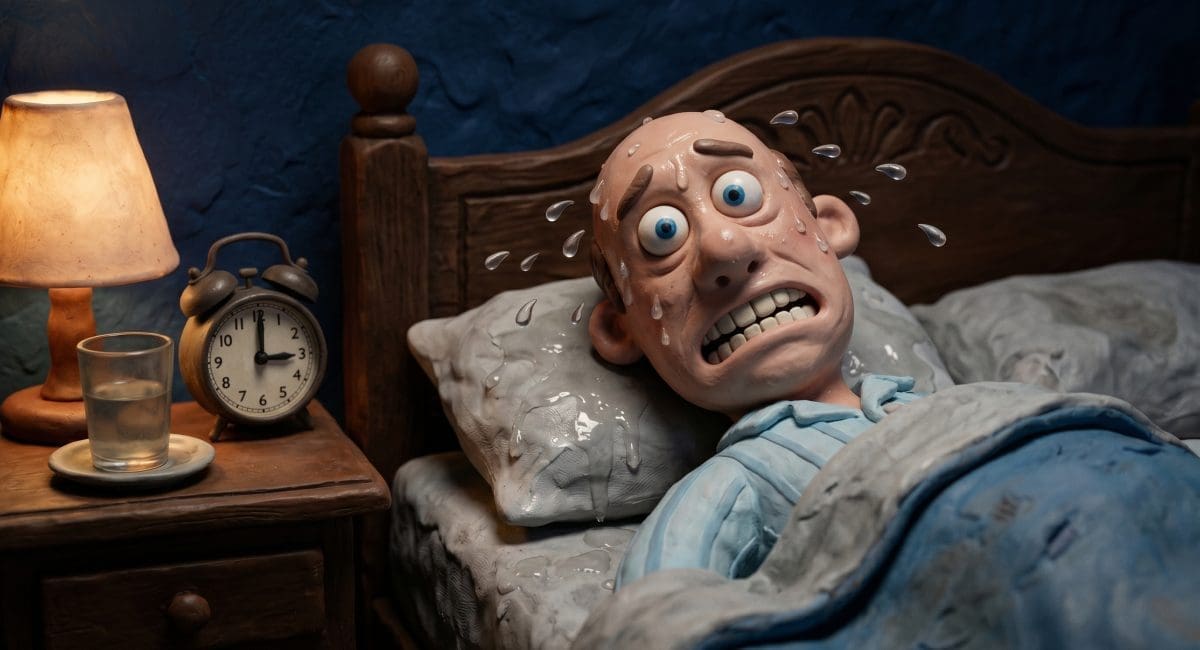
- Hangover night sweats happen because alcohol attacks your body’s temperature control from five different angles at once
- The main culprits: vasodilation (blood vessels expanding), acetaldehyde buildup, hypothalamus disruption, blood sugar crashes, and nervous system rebound
- Darker liquors like whiskey and red wine tend to cause worse sweating than clear spirits like vodka
- No, you can’t “sweat out” a hangover — that’s a myth that actually makes things worse
- Best moves right now: sip water with electrolytes, keep the room at 66–70°F, and grab a light snack to stabilize your blood sugar
Hangover night sweats are one of those symptoms nobody warns you about until you’re lying in a puddle of your own regret at 3 AM. You went out, had a great time, maybe overdid it a little. Now you’re wide awake, drenched from head to toe, wondering if something is seriously wrong.
Good news: you’re probably fine. Annoying news: your body is doing exactly what it’s designed to do. It’s just doing it in the most uncomfortable way possible.
Night sweats after drinking happen because alcohol attacks your body’s temperature control from multiple angles at once. We’re talking blood vessel chaos, toxic byproducts, a confused brain thermostat, and a blood sugar crash — all while you’re trying to sleep.
Here’s why hangover night sweats happen, what makes them worse, and what you can actually do about it.
Why drinking causes hangover night sweats
There’s no single reason you wake up soaked after a night of drinking. Your body is fighting a war on five fronts at the same time. Each one alone can trigger sweating. Together, they turn your bed into a slip-and-slide.
Your blood vessels go wide open (vasodilation)
Alcohol is a vasodilator, meaning it forces your blood vessels to relax and expand. When that happens, blood rushes to the surface of your skin. Your body reads that rush of warm blood as overheating — even though your core temperature is actually dropping.
So your sweat glands kick into overdrive to cool you down. This is one of the main reasons hangover night sweats hit so hard. You feel warm and flushed while drinking, then wake up drenched hours later as your body keeps dumping heat it doesn’t actually have.
Acetaldehyde — your liver’s toxic middle child
When you drink, your liver breaks alcohol down in two steps. First, it converts ethanol into acetaldehyde — a toxic compound that’s 10 to 30 times more poisonous than alcohol itself. Then it converts acetaldehyde into harmless acetic acid (basically vinegar).
That middle step is where the damage happens. Acetaldehyde triggers rapid pulse, skin flushing, nausea, and — you guessed it — sweating. The faster you drink, the more acetaldehyde piles up before your liver can clear it. It also increases histamine and bradykinin levels in your body, which ramp up vasodilation even further.
Here’s the kicker: some people process acetaldehyde slower than others due to genetic variants of the ALDH2 enzyme. If you’re one of them, you’ll sweat more, flush harder, and feel worse — even from a modest amount of alcohol.
Your brain’s thermostat goes haywire
Your hypothalamus is the part of your brain that regulates body temperature. Think of it as your internal thermostat. Alcohol disrupts its ability to read your actual temperature accurately.
When the hypothalamus gets confused, it can’t tell whether you’re hot or cold. So it overcorrects — triggering waves of sweating followed by chills, then more sweating. That’s why hangover night sweats often come in cycles instead of one long, steady sweat.
Alcohol makes you feel warmer by sending blood to your skin, but it actually lowers your core body temperature. Your brain gets fooled by the surface warmth — so it sweats to cool you down when you’re already cooling off. Classic miscommunication.
Blood sugar crashes in your sleep
Alcohol blocks your liver’s ability to produce glucose through a process called gluconeogenesis. That means your blood sugar can drop significantly while you sleep — especially if you didn’t eat much before or during drinking.
When blood sugar drops too low, your body treats it as an emergency. It releases cortisol and adrenaline to bring levels back up. Those stress hormones spike your heart rate, trigger anxiety, and make you sweat. This blood sugar crash is a major contributor to hangover night sweats — and it’s also why you sometimes wake up at 3 AM with your heart pounding and a vague sense of dread.
Nervous system rebound (the “mini withdrawal”)
Even if you’re a casual social drinker, your nervous system reacts to alcohol wearing off. Here’s why: alcohol suppresses your central nervous system (CNS). It calms things down, slows your heart rate, and relaxes you.
When the alcohol clears your system, your CNS rebounds in the opposite direction. It overcompensates by becoming hyperactive — raising your heart rate, spiking your blood pressure, and triggering sweating. This isn’t clinical alcohol withdrawal. It’s a milder version of the same mechanism, and it happens to anyone whose body had to adjust to alcohol’s depressant effects.
A study published in the journal Alcohol Research notes that increased sympathetic nervous system activity — including sweating, high blood pressure, and rapid heartbeat — commonly accompanies hangovers even in non-dependent drinkers.
Do some drinks cause worse hangover night sweats than others?
Yes, actually. And it comes down to something called congeners.
Congeners are chemical byproducts created during fermentation and aging. They give darker spirits their flavor, color, and aroma. They also make your hangover worse — including the sweating.
Drinks high in congeners include whiskey, bourbon, brandy, red wine, and dark rum. Drinks low in congeners include vodka, gin, white rum, and light beer. Here’s a quick breakdown:
| Drink Type | Congener Level | Night Sweat Risk |
|---|---|---|
| Bourbon / whiskey | High | Higher |
| Red wine | High | Higher |
| Brandy | High | Higher |
| Dark rum | Moderate–High | Moderate–Higher |
| Beer (dark) | Moderate | Moderate |
| Beer (light) | Low | Lower |
| Vodka | Low | Lower |
| Gin | Low | Lower |
That said, volume matters more than type. Six vodka sodas will leave you sweatier than two glasses of bourbon. Congeners make hangover night sweats worse at the margins, but how much you drink is still the biggest factor in night sweats after drinking.
Can you actually sweat out a hangover?
No. This is one of the most persistent hangover myths, and it needs to die.
Your liver processes about one standard drink per hour. That’s roughly 12 oz of beer, 5 oz of wine, or 1.5 oz of liquor. Sweating removes only a tiny fraction of alcohol from your system — somewhere around 5% at most leaves through sweat, breath, and urine combined.
Hitting the sauna or gym the morning after doesn’t speed up your liver. It does, however, accelerate dehydration — which is already one of the main reasons you feel terrible. You’re compounding the problem, not solving it.
Your body sweats because of the hangover. It’s not sweating to cure the hangover. Hangover night sweats are a symptom, not a solution. There’s a big difference.
Bottom line: Skip the “sweat it out” workout. Hydrate, eat something, and let your liver do its job. If you want to cure a hangover faster, focus on what actually works.
How to stop hangover night sweats
If you’re already in bed dealing with hangover night sweats, here’s what actually helps right now:
Keep your bedroom at 66–70°F. Your body is already dumping heat it doesn’t have. A cool room gives it somewhere to send that heat without drenching you further. Crack a window or drop the thermostat before you pass out.
Switch to lightweight, breathable bedding. That heavy comforter traps heat against your skin and makes the sweating loop worse. A cotton or bamboo sheet is your friend on drinking nights.
Sip water with electrolytes. Plain water helps, but electrolytes help more. Alcohol depletes sodium, potassium, and magnesium — all of which your body needs to regulate temperature properly. Products like Liquid I.V., LMNT, or Pedialyte work well here. Keep a bottle on your nightstand.
Eat a small snack before bed. Something with protein and complex carbs helps stabilize your blood sugar overnight. A banana with peanut butter, crackers and cheese, or a handful of nuts can prevent that 3 AM cortisol spike that wakes you up drenched and anxious.
Take a cool (not cold) shower. A lukewarm-to-cool shower before bed can lower your skin temperature without triggering the vasoconstriction rebound that a freezing cold shower causes. You want to gently cool down, not shock your system.
Avoid caffeine and spicy food. Both raise your body temperature and can make the sweating worse. That late-night pizza with hot sauce? Not helping.
How to prevent hangover night sweats next time you drink
Prevention beats recovery every time. If night sweats after drinking are becoming a regular thing for you, here’s your hangover prevention game plan tuned for avoiding the overnight sweat-fest:
Hydrate between drinks. The boring answer is still the best answer. One glass of water between every alcoholic drink slows your consumption, supports your liver, and keeps dehydration from compounding the temperature chaos.
Eat before and during drinking. Food slows alcohol absorption, which means less acetaldehyde buildup at any given moment. A solid meal with fat, protein, and carbs before your first drink makes a real difference.
Choose clear spirits when possible. Vodka, gin, and white rum have fewer congeners than whiskey, bourbon, and red wine. If hangover night sweats are a recurring problem for you, this switch alone can help.
Consider a DHM supplement. Dihydromyricetin (DHM) is a natural flavonoid that supports your liver’s ability to process acetaldehyde. Taking it before or during drinking may help reduce the toxic buildup that triggers flushing and sweating.
Know your limits — and respect them. This one’s obvious, but it’s worth saying: the less you drink, the less you sweat. You don’t need to quit drinking. You just need to find the line between a fun night and a miserable morning.
Pre-load electrolytes. Taking electrolytes before you start drinking — not just after — helps your body maintain fluid balance throughout the night. It’s a small move that pays off at 3 AM.
When hangover night sweats mean something more serious
Important: This section covers situations that require medical attention. If any of these apply to you, talk to a doctor — don’t rely on internet advice.
Occasional hangover night sweats after a heavy night out are normal for social drinkers. Your body is processing alcohol, and sweating is one of the ways it deals with the overload. That’s not a red flag by itself.
However, certain patterns deserve attention:
- Sweating from small amounts of alcohol — If two drinks leave you drenched, you may have alcohol intolerance, a genetic condition where your body lacks the enzymes to break down alcohol properly. This is different from a hangover and worth discussing with your doctor.
- Night sweats that last more than 24–48 hours — Hangover sweats typically resolve within a day. If they persist beyond that, something else may be going on.
- Sweating that gets worse when you cut back on drinking — This can be a sign of physical dependence. When your body has adapted to regular alcohol intake, reducing it triggers withdrawal symptoms — including sweating, tremors, and anxiety.
- Sweats accompanied by severe symptoms — Tremors, hallucinations, seizures, severe confusion, or a rapid heartbeat alongside sweating may indicate alcohol withdrawal syndrome or delirium tremens (DTs), which is a medical emergency.
- Night sweats that happen without drinking — If you sweat at night regardless of alcohol, other causes include thyroid issues, infections, medications (especially antidepressants), hormonal changes, and in rare cases, certain cancers. See your doctor to rule these out.
The bottom line: hangover night sweats from a big night out are usually just your body doing its job. But if the pattern changes, intensifies, or shows up with other concerning symptoms, don’t brush it off.
Frequently asked questions about hangover night sweats
How long do hangover night sweats last?
For most people, hangover night sweats resolve within a few hours to about 24 hours after your last drink. The timeline depends on how much you drank, your body weight, your metabolism, and how well you hydrate during recovery. If sweating lasts more than 48 hours, talk to a doctor.
Why do I get chills AND sweats during a hangover?
Because your hypothalamus — the brain’s thermostat — is malfunctioning. Alcohol disrupts its ability to read your body’s temperature accurately. It overcorrects in both directions, cycling between “too hot” (sweating) and “too cold” (chills). This chills-and-sweats cycle is common with night sweats after drinking, and it’s also why hangovers can feel like a mild flu.
Does drinking water before bed prevent hangover sweating?
It helps reduce hangover night sweats, but it won’t eliminate sweating entirely. Water combats dehydration, which is one factor in the sweating equation. However, vasodilation, acetaldehyde buildup, and nervous system rebound will still happen regardless of hydration. Water with electrolytes is better than water alone.
Can hangover night sweats cause dehydration?
Yes. Night sweats after drinking pile on additional fluid loss while you sleep — when you’re not drinking any water to replace it. Alcohol already dehydrates you through increased urination. This double hit is one reason hangovers feel so much worse in the morning. Keeping water or an electrolyte drink on your nightstand helps offset hangover night sweats and the dehydration they cause.
Why are my hangover night sweats getting worse as I get older?
Your body processes alcohol and acetaldehyde more slowly with age. Liver enzyme efficiency declines, your body holds less water, and your metabolism slows down. All of this means more acetaldehyde hanging around longer, worse temperature regulation, and more sweating. It’s the same reason hangovers get worse with age across the board.
Is it normal to sweat after just a few drinks?
It can be. Everyone’s tolerance and enzyme levels are different. If you consistently sweat from small amounts of alcohol, you may have a genetic variant that slows acetaldehyde processing. This is especially common in people of East Asian descent. If it bothers you, talk to your doctor about alcohol intolerance testing.
Sources
- Alcohol Hangover: Mechanisms and Mediators — National Institutes of Health (PMC)
- Hangover: What It Is, Symptoms & How to Cure — Cleveland Clinic
- What’s the Connection Between Night Sweats and Alcohol? — Healthline
- Night Sweats and Alcohol: Causes and Treatment — Medical News Today
- Hangover — Wikipedia (pathophysiology section)
- How to Remove Acetaldehyde from the Body Naturally — Capsulyte
If you find yourself dealing with hangover night sweats regularly, or if your drinking patterns are starting to concern you, help is available. The SAMHSA National Helpline (1-800-662-4357) is free, confidential, and available 24/7. No judgment — just support whenever you’re ready.