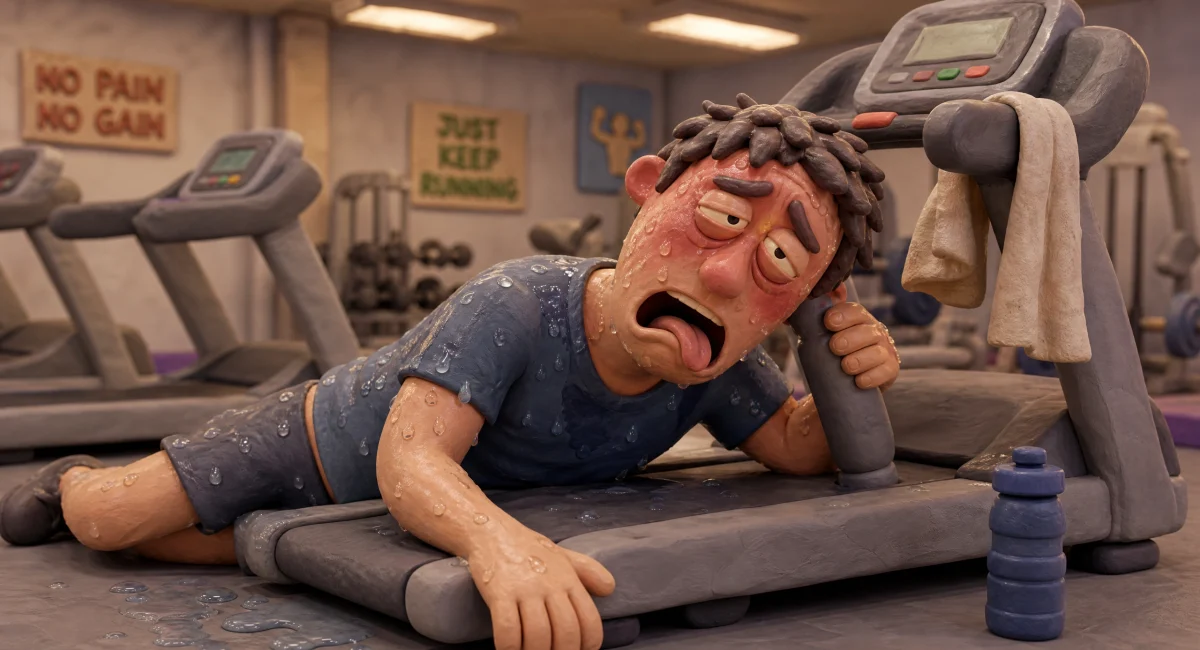
No, you can’t sweat out a hangover. Your liver clears about 90% of the alcohol, and barely any leaves through sweat. Worse, a sauna or hard workout while hungover can deepen your dehydration — and mixing alcohol with a hot sauna is genuinely risky. Light movement is fine; sweating it out is a myth.
This article includes an affiliate link or two. If you buy through them, we may earn a small commission at no extra cost to you. We only point to stuff we’d actually use. See our full affiliate disclosure.
Trying to sweat out a hangover feels productive, doesn’t it? You picture the booze pouring out of your pores at the gym or in a steamy sauna. Sorry — that’s not how it works.
Your liver does almost all the cleanup, not your skin. Only a tiny slice of alcohol ever leaves through sweat.
So a hard workout won’t flush the hangover out faster. In fact, it can make you feel worse, and a sauna can be downright dangerous.
Let’s bust the myth, cover what exercise really does to a hangover, and find the safe middle ground.
Can you actually sweat out a hangover?
Let’s answer it flat out. No, you can’t sweat out a hangover, no matter how much you drip.
Here’s why. Your liver handles about 90% of the alcohol you drink, breaking it down step by step.
Only a tiny 2 to 5% leaves your body unchanged, through breath, sweat, and pee. That’s barely a rounding error.
So sweating buckets does nothing to the alcohol still in your system. The liver sets the pace, and it won’t be rushed.
Nothing speeds up the cleanup
Want the frustrating truth? Nothing speeds up how fast you process alcohol.
Your body clears roughly one standard drink per hour, and that rate is basically fixed. Your liver enzymes only work so fast.
Coffee won’t change it. Cold showers won’t. A sweaty spin class won’t either.
You just have to wait it out. Time is the only thing that lowers your blood alcohol.
Why sweating it out backfires
Now here’s the part that stings. Hard exercise with a hangover often makes you feel worse, not better.
You’re already dehydrated from a night of drinking. Sweating through a tough workout drains even more fluid and electrolytes.
Your body isn’t at full power, either. Studies show a hangover cuts your endurance, strength, and reaction time.
Your heart works harder too, and your balance is off. That combo raises your risk of a dizzy spell or injury.
The sauna danger you need to know
This one deserves a serious tone. Mixing a sauna with alcohol or a bad hangover can be genuinely dangerous.
Finland’s favorite hangover ritual
In Finland, sweating out a rough night in the sauna is practically tradition. The catch? It’s culture and comfort, not detox — and doing it drunk can be hazardous.
Alcohol and heavy heat are a risky pair. Both lower blood pressure and strain your heart, and alcohol blunts how your body handles heat. Finnish research has tied many sauna deaths to drinking beforehand, often from dehydration and irregular heart rhythms. If you’ve been drinking, skip the sauna until you’re sober and rehydrated.
So does any morning-after movement help?
Okay, some good news. Light movement can still make you feel better, just not for the reason you think.
A gentle walk or easy stretch boosts endorphins and gets your blood flowing. That can lift your mood and ease the fog.
But notice the key word: feel. You’re easing symptoms, not detoxing or curing anything.
So if you’re hydrated and up for it, a little movement is fine. Just keep your expectations realistic.
How to move safely with a hangover
If you do want to move, do it smart. These steps keep it safe and actually useful.
- Hydrate first. Drink water with electrolytes before you do anything, and keep sipping.
- Eat a little. A small snack steadies your blood sugar and settles your stomach.
- Go gentle. A walk, light stretching, or easy yoga beats a brutal bootcamp.
- Skip the heat. No sauna, hot yoga, or hard cardio until you’re sober and recovered.
- Listen to your body. Stop right away if you feel dizzy, sick, or your heart races.
For a smarter recovery overall, see our how to cure a hangover and hangover prevention guides. A DHM supplement may help too, though the science is still promising, not proven. And remember, some drinks leave you rougher than others.
Bottom line: rest, water, and time do the real work. Electrolytes and supplements just support the process.
Worth keeping on hand:
| Product | What it does | Amazon link |
|---|---|---|
| Electrolyte mix (e.g., Liquid I.V.) | Replaces the fluids and minerals lost to alcohol and sweat. | View on Amazon |
| DHM supplement (e.g., Cheers Restore) | A recovery aid that’s promising but not proven — see our DHM guide. | View on Amazon |
Sweating out a hangover: FAQ
Can you sweat out a hangover?
No. Your liver clears about 90% of alcohol, and only 2 to 5% leaves through sweat, breath, and urine. Sweating doesn’t speed it up.
Does exercise cure a hangover?
No. Exercise doesn’t remove alcohol any faster. Light movement may lift your mood, but it won’t detox you or fix the hangover.
Is it bad to work out with a hangover?
It can be. You’re dehydrated, your performance drops, and your injury risk rises. Keep it gentle and hydrate first.
Is a sauna good for a hangover?
No, and it can be dangerous. Heat plus alcohol strains your heart and worsens dehydration. Wait until you’re fully sober.
What actually helps a hangover?
Time, water, electrolytes, food, and rest. Nothing speeds up how fast your body clears the alcohol.
Sources
- The Guardian — Is it true that you can sweat out a hangover?
- Bowling Green State University — Alcohol Metabolism
- Interaction between alcohol and exercise: physiological and haematological implications (PubMed)
- Relationship between alcohol hangover and physical endurance (PMC)
- Medical News Today — Sauna: health benefits, risks, and precautions
- Is sauna bathing protective of sudden cardiac death? A review (PubMed)
We take this seriously. Every health claim here is backed by studies and credible sources, and we cite them so you can check our work. But we’re researchers and writers, not doctors, and this article isn’t medical advice. You know your own body, history, and medications better than any website can. So if anything here raises a question or concern, talk to a qualified healthcare provider — we genuinely encourage it. For more, see our full disclaimer.
You can’t sweat alcohol away, and you can’t outrun its bigger effects either. If drinking is affecting your life or someone you care about, free and confidential help is available. The SAMHSA National Helpline offers support 24/7 at 1-800-662-4357.