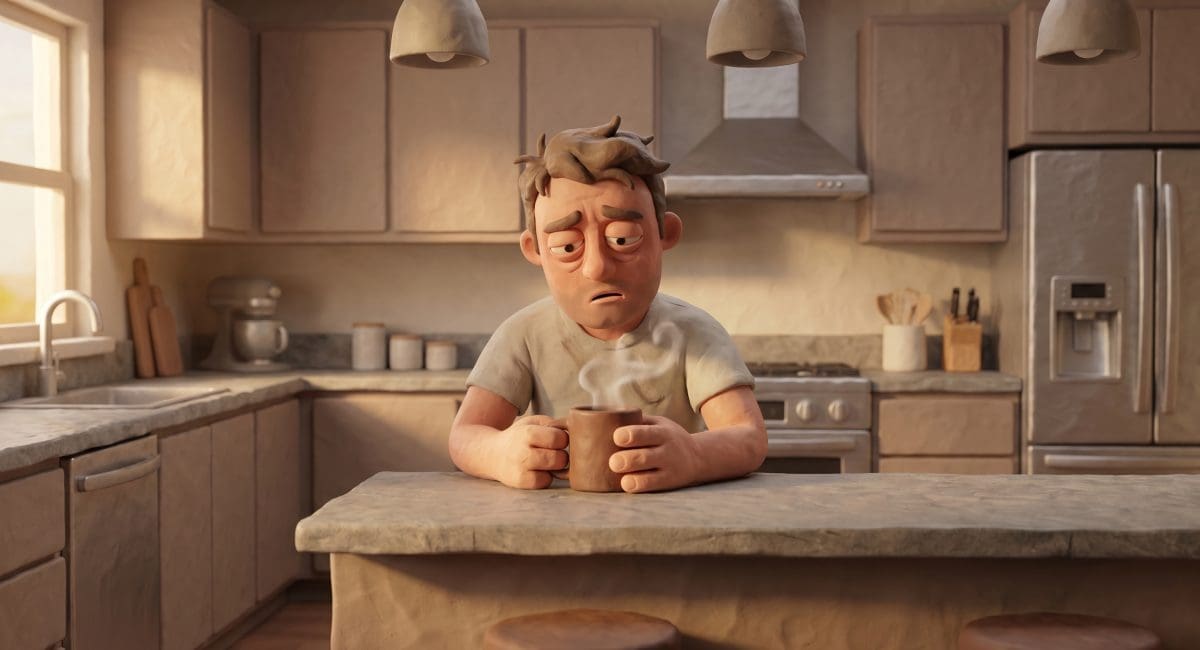
Coffee won’t cure your hangover or sober you up — caffeine does nothing to your blood alcohol. But for regular coffee drinkers, a small cup can ease grogginess and head off a caffeine-withdrawal headache. Just hydrate with water first, and keep it to a cup or two.
This article includes an affiliate link or two. If you buy through them, we may earn a small commission at no extra cost to you. We only point to stuff we’d actually use. See our full affiliate disclosure.
Reaching for coffee for a hangover feels almost automatic. Pounding head, foggy brain, so you stumble to the coffee maker on instinct. But does it actually help?
Here’s the honest answer up front. Coffee won’t cure a hangover, and it definitely won’t sober you up. Caffeine doesn’t touch your blood alcohol at all.
But it’s not useless, either. For regular coffee drinkers, a small cup can lift the fog and stop a withdrawal headache before it starts.
The trick is knowing when coffee helps and when it backfires. So let’s sort the myth from the science — and figure out whether you should pour that cup.
Does coffee help a hangover? The honest answer
Let’s start with the realistic version. Coffee for a hangover can help a little, but it fixes nothing at the root.
A hangover comes from dehydration, poor sleep, inflammation, and your body processing alcohol. Caffeine doesn’t undo any of that. The drink itself matters too, since some types of alcohol hit harder than others.
What coffee can do is mask symptoms. It makes you feel more awake, even though your body is still recovering.
So think of coffee as a comfort, not a cure. It has a role, but a small one.
The big myth: coffee doesn’t sober you up
Here’s the myth worth killing first. Coffee does not sober you up, no matter what the movies show.
Caffeine is a stimulant, not an antidote. It doesn’t lower your blood alcohol or speed up how fast you process alcohol.
What it does is sneakier. Caffeine makes you feel alert while you’re still drunk, which researchers call masking.
This matters for safety. Feeling awake doesn’t mean you’re okay to drive, and that mismatch leads to bad decisions. As the Cleveland Clinic puts it, coffee has no power to make you less drunk. So never treat a cup as a green light to get behind the wheel.
Does coffee dehydrate you and make it worse?
Now the myth nobody seems to update. You’ve heard coffee dehydrates you, so it must make a hangover worse, right?
Not really. That idea comes from old studies using big caffeine doses on people who never drank coffee.
Modern research tells a different story. In a controlled crossover study, moderate coffee kept regular drinkers just as hydrated as plain water.
The reason is tolerance. If you drink coffee often, your body adjusts, and caffeine’s mild diuretic effect mostly fades.
So your morning cup isn’t draining you dry. Still, alcohol already dehydrated you overnight, so water should come first.
Coffee and your hangover headache
Coffee and headaches have a complicated relationship. Caffeine can cut both ways here.
On one hand, caffeine narrows blood vessels. That’s why it shows up in many headache medicines, and it may ease the throbbing.
On the other hand, skipping your usual coffee causes its own problem. Regular drinkers get caffeine-withdrawal headaches, which pile onto the hangover.
So if coffee is part of your routine, a small cup helps avoid that double whammy. If it isn’t, you don’t need to start now.
The hangxiety problem
Here’s a downside people miss. If you wake up anxious after drinking, coffee can crank that up.
Many people feel jittery and uneasy the morning after — a combo nicknamed hangxiety. Caffeine adds fuel to that fire.
Alcohol already wrecks your sleep, leaving you frazzled. A big coffee on top can tip you into full jitters. Our guide to sleep after drinking alcohol covers why that night of rest was worse than it felt.
If you’re anxiety-prone, go easy. A smaller cup, or even decaf, may treat you better.
Caffeine and alcohol the same night: the “wide awake drunk” risk
Now a genuinely serious one. Mixing caffeine and alcohol in the same night is a different beast.
The drink that got banned for this
Caffeinated malt liquors like Four Loko hid drunkenness so well that U.S. regulators forced the caffeine out in 2010. “Blackout in a can” was a real nickname.
Energy drinks plus liquor create what experts call wide awake drunk. The caffeine masks how impaired you are, so you keep going.
That’s not just a rough morning. People in this state tend to drink more and take bigger risks, including driving. The FDA treated this as serious enough to pull caffeine from alcoholic drinks. The fix is simple: keep your caffeine and your drinking on separate clocks, not in the same glass.
How to have your coffee without making things worse
Want your coffee anyway? Totally fine — just do it smart.
- Hydrate first. Drink a big glass of water before your coffee, since alcohol left you dry.
- Keep it small. One or two cups is plenty; more invites jitters and anxiety.
- Eat something. A little food steadies your blood sugar and protects your stomach.
- Mind the timing. Don’t slam coffee right after drinking, and skip it close to bedtime.
- Know yourself. If you’re anxiety-prone or sensitive, go decaf or skip it.
For the dehydration that’s actually behind your hangover, water and an electrolyte powder do more than caffeine ever will. Our how to cure a hangover and hangover prevention guides cover the full playbook. If food is what you need, start with the best hangover foods.
Real talk: hydration and time do the heavy lifting. Coffee and supplements are extras, not miracle fixes.
Worth keeping on hand:
| Product | What it does | Network / Link |
|---|---|---|
| Electrolyte mix (e.g., Liquid I.V.) | Replaces the fluids and minerals alcohol flushed out overnight. | View on Amazon |
| DHM supplement (e.g., Cheers Restore) | A recovery aid that’s promising but not proven — see our DHM guide. | View on Amazon |
Coffee for a hangover: FAQ
Does coffee help a hangover?
A little. It can ease grogginess and prevent a caffeine-withdrawal headache. But it won’t cure the hangover or lower your blood alcohol.
Does coffee sober you up?
No. Caffeine makes you feel more alert but doesn’t reduce intoxication. You can feel wide awake and still be drunk and impaired.
Does coffee make a hangover worse by dehydrating you?
Probably not for regular drinkers. Studies show moderate coffee hydrates about as well as water. Still, drink water first.
Can coffee help a hangover headache?
It can, especially for regular coffee drinkers. Caffeine narrows blood vessels and prevents withdrawal headaches. Too much can backfire, though.
Is it bad to mix coffee and alcohol?
Mixing them the same night is risky. Caffeine hides how drunk you are, which can lead to overdrinking and unsafe choices.
Sources
- Cleveland Clinic — Can Coffee Help Cure a Hangover?
- American Psychological Association — Caffeine doesn’t reverse alcohol’s cognitive impairment
- Killer et al. (PLOS ONE) — No evidence of dehydration with moderate daily coffee intake
- Harvard Health — 7 ways to cure your hangover
- Sleep Foundation — The impact of caffeine and alcohol on sleep
- U.S. FDA — Caffeinated alcoholic beverages
- Ribeiro & Sebastião (PubMed) — Caffeine and adenosine
We take this seriously. Every health claim here is backed by studies and credible sources, and we cite them so you can check our work. But we’re researchers and writers, not doctors, and this article isn’t medical advice. You know your own body, history, and medications better than any website can. So if anything here raises a question or concern, talk to a qualified healthcare provider — we genuinely encourage it. For more, see our full disclaimer.
Coffee can’t fix what too much alcohol does. If drinking is affecting your life or someone you care about, free and confidential help is available. The SAMHSA National Helpline offers support 24/7 at 1-800-662-4357.