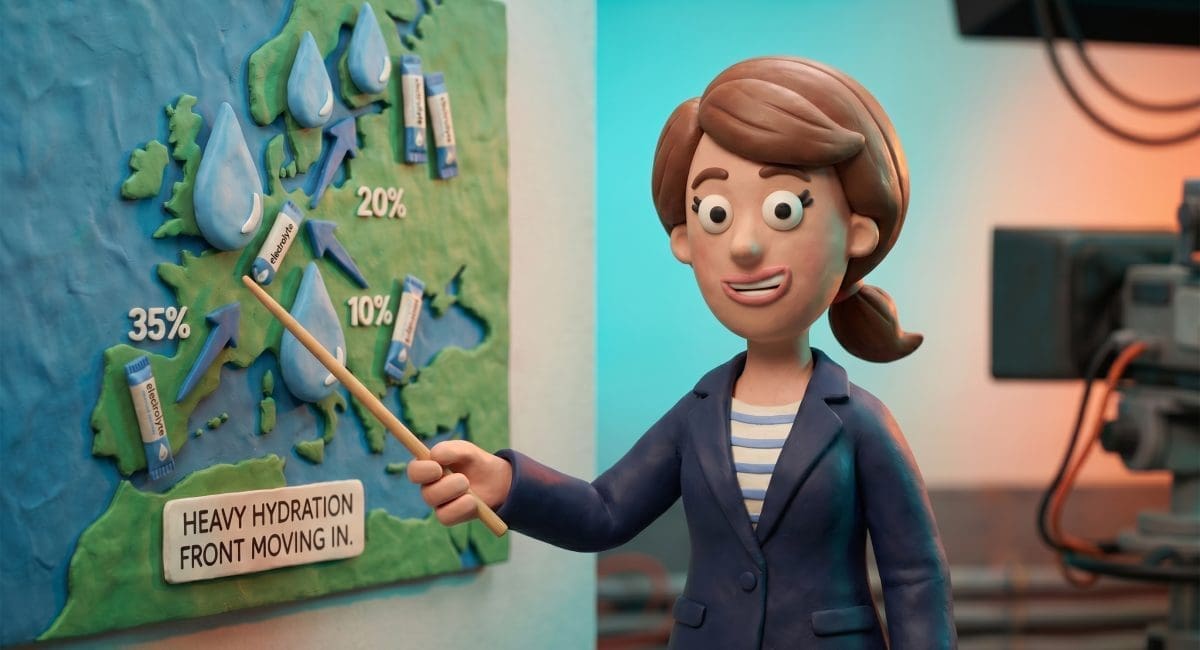
- The calculator turns your drinking plans into a precise water target, split across three windows: before, during, and before bed.
- Alcohol is a diuretic — you lose roughly 10ml of extra fluid per gram of alcohol consumed, on top of your normal fluid needs.
- Temperature and activity level can double or triple your real hydration needs versus a calm night indoors.
- Electrolytes matter most in heat, during activity, or on heavy-drinking nights — plain water covers most other scenarios.
- Tap “Show the math behind your water plan” to see exactly how your personal target was calculated.
How much water do you actually need?
The numbers, not vibes. Tell the hydration calculator your plans, get your water targets.
—
Match every alcoholic drink with this much water.
We built the hydration calculator with real science and a lot of research, but let’s be clear: this is an estimate, not a medical prescription. Every body is different. Genetics, medications, kidney function, and a hundred other factors can change your real hydration needs.
The hydration calculator is one tool in your toolbox — use it alongside your own judgment and your own self-awareness. You know yourself better than any calculator does. If you have health concerns, take medications, or have a history of kidney issues, talk to a doctor before changing your water intake patterns significantly.
Drink responsibly. Know your limits. And if things feel wrong, get help — the SAMHSA National Helpline is free, confidential, and available 24/7.
How the pre-drinking hydration calculator works
The pre-drinking hydration calculator turns your drinking plans into a precise water target, then splits that total across three windows when hydration matters most. The hydration calculator is built on the established science of alcohol’s diuretic effect, body water distribution, and the conditions that accelerate fluid loss.
Most “drink water with alcohol” advice is generic. The hydration calculator gives you a real number based on your body weight, drink type, temperature, activity level, and current hydration status. No vague rules — just the math.
Tap “Show the math behind your water plan” after you calculate. You’ll see the base hydration debt, every modifier that adjusted the total, and the final breakdown across windows. The hydration calculator shows its work.
Why hydration matters more than any other prevention move
Alcohol is a diuretic. It suppresses the hormone vasopressin, which normally tells your kidneys to retain water. Research shows that for every gram of alcohol consumed, you lose roughly 10ml of additional fluid beyond normal urination. Across an evening of drinking, that hydration deficit adds up fast.
Dehydration is the engine behind most hangover symptoms. Headache, fatigue, dry mouth, dizziness, and that grinding morning misery — all linked to fluid loss and poor hydration. Rehydrating after the fact helps, but staying ahead of the hydration curve is dramatically more effective.
The hydration calculator focuses on prevention because that’s where the impact is biggest. Drinking 32 oz of water before bed prevents more morning misery than 64 oz drunk after symptoms hit. Smart hydration timing beats raw volume every time.
Most adults walk around mildly dehydrated all day without realizing it. By the time you feel thirsty, you’re already 1-2% dehydrated. Adding alcohol on top of that baseline deficit is why some hangovers feel apocalyptic.
What the hydration calculator measures
The hydration calculator looks at six factors that shape your real water needs. Each one shifts the math in measurable ways.
Number of drinks and body weight
Each standard drink contributes roughly 6-8 oz of net hydration debt — the diuretic loss minus the fluid in the drink itself. Body weight matters because alcohol distributes through total body water. Heavier bodies have more total water, so the same drink load creates a smaller relative deficit.
Drink type matters more than people realize
A 12 oz beer at 5% ABV has the same alcohol as a 1.5 oz shot at 40% ABV — but the beer comes with 11 oz of water, while the shot comes with almost none. That’s why beer drinkers often fare slightly better hangover-wise per drink. The hydration calculator accounts for this fluid-content difference automatically.
Temperature and activity drive sweat loss
Heat amplifies dehydration through sweating. ACSM hydration research documents fluid losses of 0.5 to 2+ liters per hour during physical activity, especially in heat. A festival in 90°F weather while dancing easily doubles or triples your hydration needs versus sitting at a 70°F dinner.
Your hydration baseline today
If you’re already behind on hydration before drinking starts, your hangover risk multiplies. The hydration calculator adds a deficit correction when you flag your hydration baseline as “poor” — basically front-loading water before alcohol enters the picture.
How to actually hit your hydration targets at events
Knowing your hydration number is one thing. Drinking the water without looking weird at a wedding is another. A few tactics that work:
- Order water with every drink. Bartenders are used to it. “And a water, please” is normal.
- Sparkling water reads like a cocktail. Add a lime. Nobody can tell.
- Pre-drink before you arrive. The pre-drinking window is the easiest to hit. Drink your 16 oz at home before you leave.
- Keep a glass of water at your seat. If you can grab it without making a trip, you’ll drink it.
- Bring a water bottle to outdoor events. Festivals, tailgates, and concerts all expect this. Use it.
- Set a reminder for the bedtime window. The pre-bed water is the most-skipped and most-effective. Don’t trust drunk-you to remember.
When electrolytes actually matter for hydration
Plain water works for most prevention scenarios. The hydration calculator only flags electrolyte recommendations when they meaningfully help your hydration math:
- High temperature (above 80°F) where sweat losses are significant
- High activity (dancing, sports, festival movement)
- Heavy drinking nights (8+ drinks)
- The before-bed window when sodium and potassium loss is substantial
Products like Liquid I.V., Pedialyte, and LMNT replenish sodium, potassium, and other electrolytes that pure water can’t. Our hangover drinks guide covers the specific products worth keeping on hand.
Common hydration myths
“Drinking water makes hangovers go away”
Partially true. Hydration reduces dehydration-driven symptoms but doesn’t address congeners, acetaldehyde, or sleep disruption. Hydration is necessary but not sufficient for hangover prevention.
“You can pre-load enough water to drink without consequences”
No. There’s a ceiling. Drinking a gallon of water before going out doesn’t bank hydration for later. Your kidneys excrete excess water within 1-2 hours. The hydration calculator splits intake across windows because timing matters as much as total volume.
“Sports drinks are better than water”
Sometimes. For most prevention, plain water is fine. For high-heat or high-activity scenarios, electrolyte drinks add value. For light dinner drinking, sports drinks are mostly sugar.
“Coffee dehydrates you, so don’t drink it the morning after”
Mostly myth. Recent research shows moderate coffee has minimal net dehydrating effect. Morning coffee won’t undo your recovery — though plain water should still come first.
Products mentioned in this article
Affiliate links labeled by network — buying through these supports the site at no cost to you.
| Product | What It Does | When To Use | Network / Link |
|---|---|---|---|
| Liquid I.V. Hydration Multiplier (Variety Pack, 16 ct) | High-electrolyte hydration multiplier. One stick equals roughly 2-3 glasses of water for hydration. | Before bed, hot weather, festivals | Amazon |
| LMNT Zero Sugar Electrolytes (Variety Pack, 12 ct) | Higher-sodium electrolyte mix without sugar. Popular for active and athletic users. | Active drinking events, dancing, sports | Amazon |
| Pedialyte Electrolyte Powder (Variety Pack, 24 ct) | Pediatric-grade rehydration solution. Strong electrolyte profile, neutral taste. | Heavy drinking nights, before bed | Amazon |
| Stanley Quencher H2.0 FlowState Tumbler (40 oz, Charcoal) | Insulated stainless steel tumbler that keeps water cold for hours. Builds the habit by making water available. | Festivals, tailgates, outdoor events | Amazon |
| Thorne B-Complex #12 (60 capsules) | Replenishes 8 B vitamins depleted by alcohol metabolism. Active forms for better absorption. | Morning after, heavy drinking nights | Amazon |
Frequently asked questions
The hydration calculator gives a research-grounded estimate based on the factors most strongly linked to alcohol-related fluid loss. It can’t account for individual variation in kidney function, medications, or specific drink chemistry. Treat the output as a directional target rather than a precise prescription.
Yes, but rarely. Water intoxication (hyponatremia) requires drinking very large volumes very fast — typically 1-2 liters per hour over multiple hours. The hydration calculator’s targets are nowhere near that range. The bigger risk for most people is drinking too little, not too much.
The hydration calculator works for the main categories: light beer, beer, wine, clear spirits, dark spirits, and sugary cocktails. It uses average alcohol-to-volume ratios for each category. Specialty drinks like high-ABV craft beer or fortified wine may shift the math slightly.
Heat triggers sweating, and sweat loss compounds alcohol’s diuretic effect. A 90°F outdoor festival can double or triple your fluid needs versus a 70°F dinner. The hydration calculator scales the temperature input non-linearly because each 10°F above the 75°F baseline matters more than the last.
Yes. The before-bed window is the most important window for hangover prevention. If you missed earlier targets, hit the bedtime number harder. Drink it slowly over 20-30 minutes rather than chugging — your body absorbs water more effectively that way.
Sources
- Hobson, R. M., & Maughan, R. J. (2010). Hydration status and the diuretic action of a small dose of alcohol.
- American College of Sports Medicine — Position Stand on Exercise and Fluid Replacement.
- National Institute on Alcohol Abuse and Alcoholism — Hangovers Fact Sheet.
- Verster, J. C., et al. (2017). Sensitivity to experiencing alcohol hangovers and dehydration.
- Eisenhofer, G., et al. (2003). Alcohol-induced suppression of vasopressin release.